
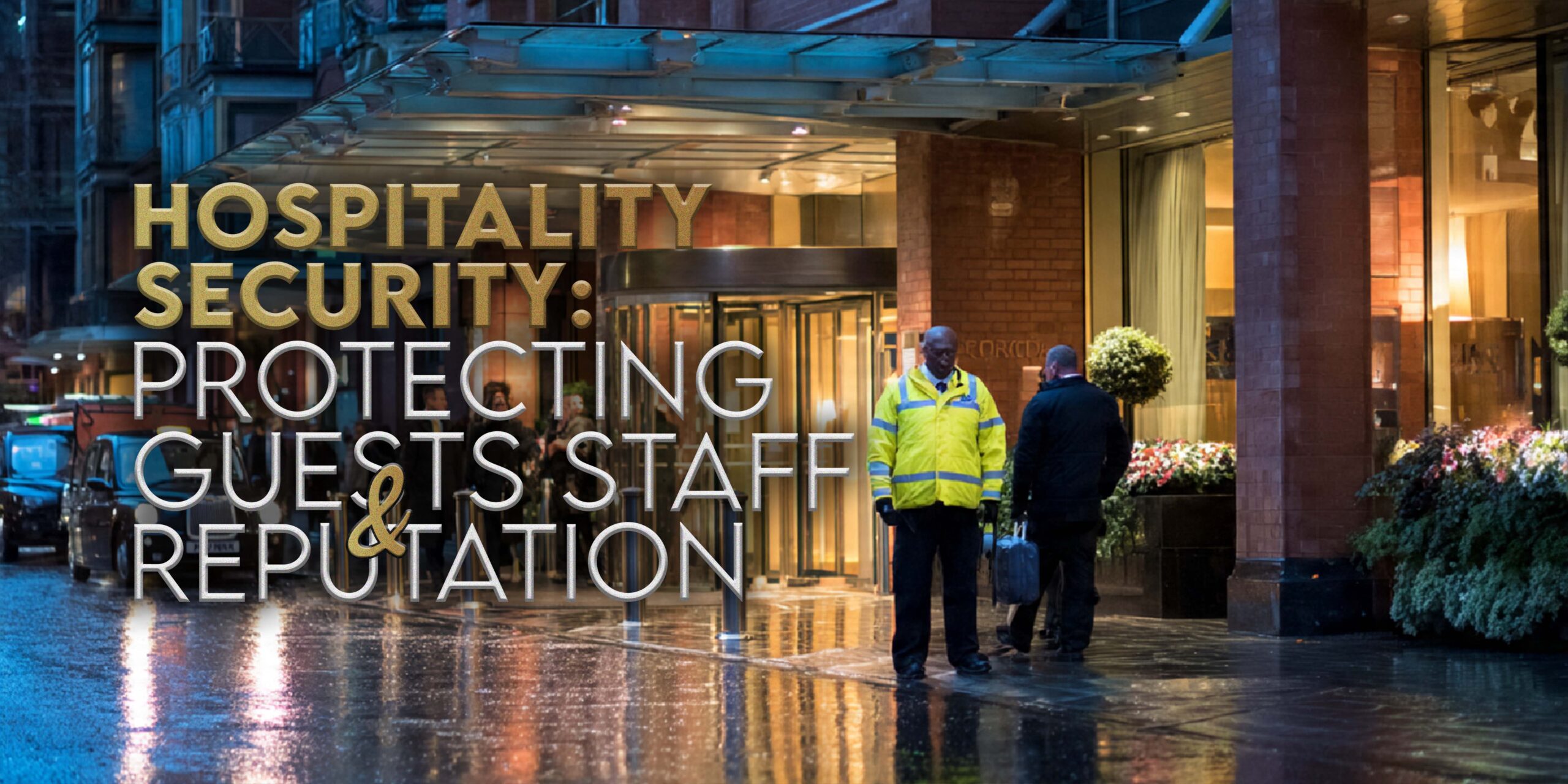
In hospitality, first impressions matter. So does the feeling guests get when they walk through the door, move through reception, attend an event, or return to their room late at night. A venue can have stylish interiors, strong service, and an excellent location, but if people do not feel safe, confidence drops quickly. That can damage guest experience, staff morale, and brand reputation far faster than many operators expect.
That is why hospitality security deserves far more attention than a basic box-ticking exercise. Good hospitality security helps protect guests, supports staff, reduces disruption, and keeps daily operations running smoothly. It also plays a direct role in safeguarding reputation, because poor incident handling can lead to complaints, negative reviews, lost bookings, and long-term trust issues.
For hotels, serviced apartments, restaurants, bars, event venues, and mixed-use hospitality sites, the risks are real. Unauthorised access, anti-social behaviour, theft, crowding, staff confrontation, and out-of-hours incidents all place pressure on teams. Moreover, hospitality settings are different from offices or warehouses. They are public-facing, people-heavy, reputation-sensitive, and often active across long hours. As a result, the security approach needs to be calm, professional, visible when needed, and discreet when appropriate.
Why Hospitality Security Matters More Than Many Businesses Realise
Hospitality venues welcome a constant flow of people. Guests, contractors, staff, suppliers, delivery drivers, event attendees, and members of the public may all move through the same space in a single day. That makes access control more difficult and incident risk more complex.
A hotel lobby, for example, must remain welcoming while still being monitored properly. A restaurant may need to manage difficult behaviour without upsetting other diners. Meanwhile, a venue hosting weddings, conferences, or private functions must protect people, manage entry, and respond quickly if an issue develops. In each case, safety and atmosphere need to work together.
Strong hospitality security supports that balance. It helps reduce visible disorder, discourages opportunistic theft, and gives staff confidence when dealing with tense situations. In addition, it provides a structured response when incidents happen, which helps management avoid panic-led decisions. That matters because the way a venue handles risk often shapes how guests remember the business.
The Risks of Poor Security in Hospitality Settings
Poor security rarely shows itself only in dramatic incidents. More often, it appears through smaller failures that gradually create bigger problems.
Missing control over side entrances, weak monitoring of public areas, inconsistent visitor checks, and slow responses to disturbances can all expose a venue. As a result, theft, trespass, property damage, and guest complaints become more likely. In addition, staff may feel unsupported if they are expected to handle confrontation without trained backing.
Reputation risk is especially important in hospitality. Guests share experiences quickly, and online reviews can influence future bookings almost immediately. If a customer feels unsafe, sees disorder, or believes the venue handled an issue badly, that reaction can spread beyond the original incident.
There is also a commercial cost. Disruption affects occupancy, repeat business, event bookings, and staff retention. Therefore, security should not be treated as a reactive expense. It is part of protecting income, service standards, and long-term credibility.
What Makes Hospitality Security Different?
Hospitality security has to do more than deter crime. It must protect people while preserving the guest experience.
That means the best security personnel are not only alert and capable. They are also calm, professional, well-presented, and confident in public-facing environments. For example, a hotel security officer may need to assist a concerned guest one moment, monitor suspicious movement the next, and help de-escalate a dispute later in the shift.
Unlike some commercial environments, hospitality spaces depend heavily on tone. Security must support the brand rather than conflict with it. A heavy-handed approach can make guests uncomfortable, while an underprepared approach can leave staff exposed. Because of that, hospitality security services need the right people, the right briefing, and a clear understanding of how the venue operates.
The Role of Trained Security Personnel in Hospitality
Trained security personnel play a central role in keeping hospitality venues safe, controlled, and professional. Their value goes far beyond standing at an entrance.
Visible deterrence without damaging atmosphere
A professional security presence can discourage theft, disorder, and unauthorised access simply by being present. However, the best officers know how to remain approachable and observant without making the environment feel hostile.
Incident prevention and early intervention
Experienced personnel often spot problems before they escalate. Suspicious behaviour, rising tension, unauthorised entry attempts, and crowding issues can often be addressed early. As a result, venues avoid more serious disruption later.
Staff support during difficult situations
Reception teams, restaurant staff, concierge teams, and event staff should not have to manage aggressive behaviour alone. Security officers provide reassurance and practical support when situations become uncomfortable or unsafe.
Controlled response to incidents
When incidents occur, trained personnel help bring structure. They assess the issue, protect people, communicate clearly, and take proportionate action. That reduces confusion and helps management respond professionally.
Protection of property and people
Security personnel also help monitor entrances, public areas, restricted zones, and operational spaces. In addition, they support wider site protection by reducing opportunities for theft, trespass, or damage.
Where Hospitality Venues Commonly Need Security Support
Different venues have different pressure points, but some areas regularly need stronger protection.
Reception and entrance areas
These spaces shape first impressions, yet they also create access risk. A good security presence helps monitor arrivals, discourage loitering, and support front-of-house teams.
Bars and licensed spaces
Alcohol can change behaviour quickly. Therefore, trained security support is often vital for managing conflict, monitoring entry, and maintaining order.
Hotels and accommodation sites
Hotels must protect guests while handling visitors, contractors, deliveries, and late-night movement. This requires careful monitoring and calm response capability.
Private functions and events
Weddings, conferences, launches, and seasonal gatherings bring crowd movement and access issues. In those settings, event-specific planning becomes essential.
Back-of-house and staff areas
Restricted zones still matter. Storage rooms, service corridors, office areas, and plant spaces can all be vulnerable if access is not controlled properly.
Event Security Within Hospitality Matters More Than Many Operators Expect
Many hospitality businesses host events, even if events are not their main service. Hotels run conferences, restaurants host private functions, venues manage seasonal gatherings, and hospitality spaces often support entertainment or branded experiences. Each of these adds a fresh layer of risk.
Guest lists may change. Crowd size may increase. Alcohol may be involved. Entry points may need tighter monitoring. In addition, venues may need to separate invited guests, staff, suppliers, and the general public. Without proper planning, the chance of disruption rises sharply.
That is where professional event security becomes especially valuable. A good team helps manage arrivals, support crowd flow, monitor behaviour, protect restricted areas, and respond quickly if an issue develops. Moreover, they help the venue remain compliant and organised rather than reactive.
For venues that regularly host live gatherings, private functions, or busy public-facing events, it is worth understanding how event security in the UK helps keep crowds safe and compliant as part of a wider hospitality security strategy.
How does hospitality security improve guest safety?
Hospitality security improves guest safety by helping control access, monitor public areas, respond to incidents, and deter disruptive behaviour. In addition, trained officers provide reassurance to both guests and staff. This creates a more secure environment without undermining the welcoming atmosphere that hospitality venues depend on.
What to Look for in a Hospitality Security Provider
Choosing the right security provider is not only about filling shifts. It is about finding a partner that understands public-facing environments, service standards, and the reputational pressure hospitality businesses face.
Sector understanding
A provider should understand how hospitality works. Hotels, restaurants, venues, and mixed-use sites are not the same as construction sites or industrial compounds. Therefore, the team should know how to protect the venue without disrupting service.
Professional presentation
Security officers in hospitality settings represent the venue as much as the provider. Presentation, communication, and attitude matter. Guests notice these details immediately.
Training and judgement
Hospitality incidents often require calm decision-making rather than forceful presence. A strong provider supplies officers who can observe, communicate, de-escalate, and respond sensibly under pressure.
Flexibility and site-specific planning
Every venue has different needs. Some require overnight cover, while others need peak-time support, event protection, or mixed front-of-house and back-of-house coverage. A provider should shape the service around the site rather than sell a generic package.
Clear communication and reporting
Managers need confidence that issues will be handled and reported properly. Good reporting supports accountability, follow-up action, and stronger operational decisions.
Can hospitality venues rely on CCTV alone?
No, CCTV alone is rarely enough. Cameras can support monitoring and provide evidence, but they do not control access, reassure staff, or intervene when a problem develops. Therefore, most hospitality venues benefit from combining CCTV with trained security personnel and clear incident response procedures.
The Benefits of Professional Hospitality Security Services
Professional hospitality security services create value across far more than safety alone.
First, they help protect the guest experience. People enjoy venues more when they feel comfortable and well looked after. Secondly, they reduce pressure on internal teams. Staff can focus on service when trained security personnel handle security-related concerns.
Moreover, professional security helps venues manage incidents before they damage atmosphere or operations. Early intervention often prevents escalation, protects reputation, and limits disruption to paying guests. In addition, strong security support can improve confidence among staff, management, and event organisers alike.
There is also a brand benefit. Venues that manage safety professionally are more likely to be trusted for repeat stays, business events, and premium bookings. That makes security a visible part of service quality, not just a hidden operational line.
Practical Signs a Venue May Need Better Security
Some businesses only review their setup after a serious incident. However, there are earlier warning signs.
You may need stronger hospitality security if your venue is experiencing repeated disturbances, unauthorised visitors, staff concerns about safety, weak control over entrances, inconsistent event management, or slow handling of guest complaints linked to disorder. Likewise, late-night footfall, alcohol-led trade, or mixed public and private use often increase the need for professional support.
Growing venues should also review security when operations change. A business that adds events, extends opening hours, or expands guest capacity may outgrow its previous arrangements. Therefore, security planning should evolve alongside the venue itself.
What security risks do hotels and hospitality venues face most often?
Hotels and hospitality venues commonly face unauthorised access, guest theft, anti-social behaviour, staff confrontation, crowding at events, and out-of-hours incidents. In addition, weak access control and poor incident handling can damage reputation quickly. That is why hospitality settings need a more tailored security approach than standard commercial premises.
How Strong Security Protects Staff as Well as Guests
Guest safety is essential, but staff protection matters just as much. Hospitality teams often work under pressure, handle complaints directly, and operate in public-facing roles where tension can rise without much warning.
Receptionists, restaurant staff, supervisors, and event teams may all find themselves dealing with difficult individuals. Without visible support, that can affect confidence, retention, and overall service delivery. By contrast, trained security officers help create a safer working environment and give staff someone to rely on when situations become uncomfortable.
This support also improves consistency. Staff are less likely to improvise poor decisions when a professional security presence is available. As a result, the venue handles issues in a more controlled and defensible way.
What should a hotel or venue look for in a security company?
A hotel or venue should look for a security company with hospitality experience, strong communication standards, professional presentation, and reliable reporting. In addition, the provider should understand guest-facing environments, event pressures, and de-escalation. The best partner adapts security coverage to the venue’s layout, risks, and operating hours.
Why a Layered Security Approach Works Best
Few hospitality venues benefit from relying on only one measure. A stronger approach usually combines people, process, and visibility.
For example, a venue may use trained officers for front-of-house reassurance, clear entry procedures for access control, incident reporting for accountability, and tailored event support during high-footfall periods. Meanwhile, management can review patterns, improve weak points, and adjust deployment where needed.
This layered model works because hospitality risk is rarely one-dimensional. A single venue may need guest reassurance, staff support, theft deterrence, event control, and discreet late-night monitoring across the same week. Therefore, planning should reflect real use rather than assumptions.
Businesses seeking broader protection across hotels, venues, and commercial premises can also review H&D Security’s security services to understand how support can be tailored to different hospitality settings.
Is event security necessary for hotels and hospitality venues?
Yes, event security is often necessary when venues host conferences, weddings, parties, launches, or public gatherings. These events bring extra guests, higher footfall, access challenges, and sometimes alcohol-related risk. Professional event security helps manage entry, support crowd control, protect restricted areas, and reduce disruption during busy functions.
Choosing Hospitality Security That Matches Your Venue
The right solution depends on the venue, the operating model, and the type of risk involved. A boutique hotel may need discreet overnight support and lobby monitoring. A busy restaurant may need visible weekend cover. A multi-use venue may require a blend of front-of-house presence, event protection, and incident response planning.
Because no two sites operate in exactly the same way, security should be tailored rather than copied from another business. That means reviewing entry points, guest flow, staffing patterns, busy periods, public access, and the likelihood of conflict or disorder. Once those factors are clear, the security model becomes easier to define.
Good hospitality security protects more than the premises. It protects confidence. Guests want reassurance, staff want support, and management wants continuity. A well-planned service helps deliver all three.
Conclusion
Hospitality security plays a vital role in protecting guests, supporting staff, and defending the reputation businesses work hard to build. In a sector where trust, comfort, and service quality matter every day, poor security can quickly create operational, financial, and reputational damage.
Professional support helps venues stay welcoming while remaining controlled, prepared, and resilient. Whether the priority is guest safety, staff reassurance, event protection, or stronger incident handling, the right approach should reflect how the venue actually operates.
H&D Security provides practical, professional security support for hospitality venues across the UK. If you want to strengthen protection for your hotel, restaurant, event venue, or guest-facing site, contact H&D Security to discuss a tailored solution that protects people, operations, and reputation.
People Also Ask
How does hospitality security improve guest safety?
Hospitality security improves guest safety by helping control access, monitor public areas, respond to incidents, and deter disruptive behaviour. In addition, trained officers provide reassurance to both guests and staff. This creates a more secure environment without undermining the welcoming atmosphere that hospitality venues depend on.
Can hospitality venues rely on CCTV alone?
No, CCTV alone is rarely enough. Cameras can support monitoring and provide evidence, but they do not control access, reassure staff, or intervene when a problem develops. Therefore, most hospitality venues benefit from combining CCTV with trained security personnel and clear incident response procedures.
What security risks do hotels and hospitality venues face most often?
Hotels and hospitality venues commonly face unauthorised access, guest theft, anti-social behaviour, staff confrontation, crowding at events, and out-of-hours incidents. In addition, weak access control and poor incident handling can damage reputation quickly. That is why hospitality settings need a more tailored security approach than standard commercial premises.
What should a hotel or venue look for in a security company?
A hotel or venue should look for a security company with hospitality experience, strong communication standards, professional presentation, and reliable reporting. In addition, the provider should understand guest-facing environments, event pressures, and de-escalation. The best partner adapts security coverage to the venue’s layout, risks, and operating hours.
Is event security necessary for hotels and hospitality venues?
Yes, event security is often necessary when venues host conferences, weddings, parties, launches, or public gatherings. These events bring extra guests, higher footfall, access challenges, and sometimes alcohol-related risk. Professional event security helps manage entry, support crowd control, protect restricted areas, and reduce disruption during busy functions.
Why is hospitality security important for reputation?
Hospitality security is important for reputation because guests quickly notice whether a venue feels safe, well-managed, and professional. Poor incident handling can lead to complaints, bad reviews, lost bookings, and reduced trust. Strong security, on the other hand, supports confidence, protects staff, and helps maintain service standards.