Construction sites combine workers, subcontractors, delivery drivers, machinery, materials, temporary access routes and layouts that change as work progresses. Effective security guard services should therefore match the site’s current work phase, access pattern and operating hours rather than rely on a fixed guarding model.
For project teams, security guard services can support controlled access, contractor movement, delivery procedures, incident reporting and out-of-hours arrangements. The strongest guarding plan changes with the project and stays connected to site management procedures.
What Do Security Guard Services Do on Construction Sites?
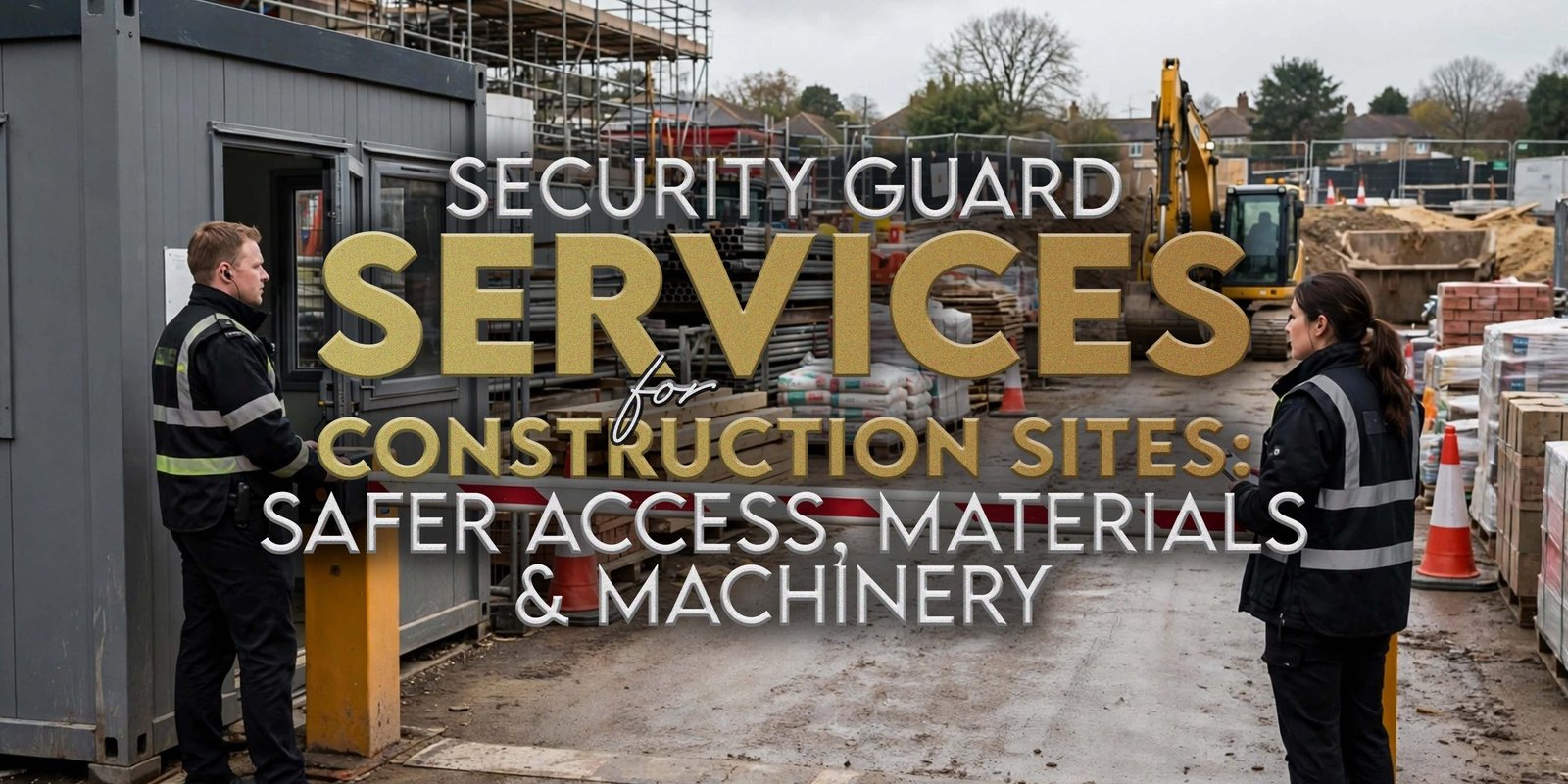
Security guard services on construction sites can support controlled access, visitor and contractor procedures, delivery entry, vehicle movement, patrols, incident reporting and site instructions. The exact duties should reflect the project’s stage, operating hours, access points and layout rather than assume every construction site needs the same guarding arrangement.
In practice, an assignment may involve gatehouse duties, a designated access point, agreed patrol responsibilities or support during reduced-occupancy periods. However, site managers should define the role before deployment so guarding supports the construction programme rather than operating separately from it.
Why Construction Sites Need Site-Specific Guarding
Construction projects change continuously. Groundworks, structural work, fit-out and handover can each alter access points, contractor numbers, machinery, stored materials and vehicle movement.
Therefore, security guard services should be reviewed as the project moves from one phase to another. A plan that works during excavation may no longer fit a later stage with internal trades, different entrances and fewer heavy deliveries.
Project size also matters. Large schemes may have several gates and delivery routes, while smaller projects may rely on one controlled entrance and fewer vehicle movements.
Before arranging security guard services, project managers should map how people, vehicles and materials currently move through the site. This creates a clearer basis for deciding which procedures need guarding support.
Construction Security Guards at Site Entrances
Construction security guards can support authorised entry, visitor registration, contractor procedures, driver access and gatehouse activity. Their duties should follow current site instructions and clear escalation routes.
At busy entrances, security guard services should help site teams apply access procedures consistently without creating unnecessary delay. Restricted zones may use different authorisation rules from the general entrance, so managers should define who can approve access and when an issue needs escalation.
As the layout changes, entrance duties may also change. Temporary gates, revised pedestrian routes or new delivery points should trigger a review of the guarding brief.
Site Access Control for Construction Projects
Site access control can involve employees, subcontractors, visitors, inspectors, delivery drivers and temporary personnel. Clear procedures help each group understand where to report and what authorisation is required.
Security guard services can support those procedures by checking authorised access, directing arrivals and referring exceptions to the correct site contact. The exact checks should stay site-specific and should not be published as a predictable routine.
Furthermore, communication matters because access routes can change as work progresses. When the project team moves a gate or creates a new restricted area, the guarding instructions should change at the same time.
Security Guard Services for Materials and Deliveries
Construction projects receive different materials at different stages, often through busy delivery points. Security guard services can support authorised delivery access, communication with site teams and orderly movement into agreed loading or unloading areas.
The guard’s role should complement logistics management rather than replace it. Instead, guarding should support the site’s existing delivery process and escalate situations that fall outside current instructions.
Temporary storage areas may also change during the build. Therefore, security guard services should follow live site information rather than old assumptions about where materials are kept.
Security Guard Services for Machinery and Equipment
Plant machinery, construction vehicles, generators, tools and temporary equipment can move between areas as the project develops. Security guard services may support authorised access to designated areas and report visible issues under the site’s agreed procedures.
The objective is not to disclose where equipment may be most vulnerable. Instead, the guarding brief should define which areas require attention, who is authorised to enter and how irregular situations should be reported.
As machinery leaves the project or new equipment arrives, security guard services should be reviewed so the assignment remains aligned with the current site.
Building Site Security During Vehicle Movement
Building site security should account for delivery vehicles, contractor vehicles, construction traffic and changing internal routes. Vehicle movement can become especially busy during material deliveries or phase changes.
Security guard services can support authorised gate access, direct drivers into the correct site process and escalate access questions to the relevant manager. They should complement the project’s traffic-management arrangements rather than act as a separate system.
When vehicle routes change, guard instructions should change as well. This keeps access support aligned with the live construction plan.
SIA Guards: What Should Construction Companies Check?
Construction companies using SIA guards should confirm whether the duties being supplied fall within current SIA licensing requirements, whether the operative holds the appropriate licence where required and whether the assignment matches the agreed role. They should also define communication, reporting and escalation procedures before the service begins.
Current SIA guidance says private security work supplied under a contract for services can require an SIA licence when the work involves licensable activity. In-house arrangements can be treated differently, so businesses should check the current rules for the specific role rather than assume every construction-site duty is treated identically.
For relevant contracted guarding work, security guard services should be sourced and managed with current licensing checks in mind. Businesses should confirm current SIA requirements for the activities actually being performed on site.
Daytime vs Out-of-Hours Construction Security
Construction requirements can differ between normal working hours, evenings, overnight periods, weekends and temporary shutdowns. Daytime may involve more workers, visitors and deliveries, while reduced-occupancy periods can create a different access pattern.
That does not mean one period is automatically more dangerous. Instead, security guard services should reflect actual occupancy, delivery activity, machinery use and access needs during each operating period.
When the construction programme changes, managers should review whether the guarding arrangement still fits the site.
Security Guard Services for 24-Hour Construction Operations
Some construction projects operate extended hours, night shifts, weekend programmes or phased work. In those situations, security guard services should be designed around real operating requirements rather than simply extending a daytime brief without review.
Projects that genuinely need continuous coverage can also assess business 24-hour security as part of wider planning.
However, 24-hour guarding is not automatically appropriate for every construction project. The right model depends on occupancy, access activity, work schedules and the responsibilities that need an on-site presence.
Security Guards and CCTV on Construction Sites
CCTV and guarding can complement one another when their roles are clearly defined. CCTV may provide recorded or remote observation, while security guard services can support physical attendance, communication and escalation under agreed procedures.
Meanwhile, a changing site layout can affect camera coverage as hoarding, structures and internal work areas change. Businesses considering a layered approach can also review security cameras for business.
Neither technology nor guarding should automatically be treated as a complete replacement for the other. The combination should reflect the site’s current needs.
Security Guard Services During Deliveries
Construction deliveries can involve drivers, subcontractors, materials, lifting activity and changing unloading areas. Security guard services may support the authorised-access part of that process and coordinate with site contacts when information needs clarification.
However, the exact delivery procedure should stay project-specific. Guards should follow the current site brief rather than improvise a separate process.
When delivery activity increases, security guard services should be reviewed to make sure communication and access procedures remain practical.
Security Guard Services During Shift Changes
Start and finish times can produce short periods of higher movement as workers, subcontractors and vehicles enter or leave. Security guard services can help apply access procedures consistently during these periods.
The objective should be orderly movement rather than unnecessary congestion. Therefore, site managers should make responsibilities clear before busy changeover periods occur.
If workforce patterns change, the guarding plan should change with them.
Security Guard Services for Temporary Closures
Holiday shutdowns, paused projects, weekend closures, refurbishment stages and delayed work can reduce normal site occupancy. During these periods, security guard services may need a different brief from the one used during active construction.
Before a closure begins, managers should review authorised access, expected contractor visits, temporary works and reporting requirements. A reduced-activity site should not automatically keep an outdated operational guarding plan.
Security Guard Services and Patrols
Patrols may support checks of designated areas, observation of site conditions, reporting and agreed site procedures. However, security guard services should not rely on publicly predictable routes, timings or repetitive patterns.
Therefore, the site brief should define objectives without exposing operational detail. If an issue is identified, guards should know how to record it and who receives the escalation.
How Should Construction Security Change as the Project Progresses?
Construction security should change as access points, contractor numbers, materials, machinery and internal areas change. Groundworks may involve extensive vehicle movement, while fit-out can introduce more internal spaces and a different contractor mix.
During structural phases, security guard services may need to support changing gates and delivery activity. Later, fit-out and handover can shift attention towards controlled internal access, authorised visitors and different working hours.
As a result, project managers should review guarding at major phase changes rather than wait until an old brief clearly no longer fits.
Common Construction Security Guarding Mistakes
- Using one guarding plan throughout the project. Site conditions change as work progresses.
- Failing to define guard duties clearly. Guards need an operational brief and escalation route.
- Ignoring delivery and vehicle movement. Logistics activity can strongly affect access procedures.
- Overlooking contractor access. The workforce mix can change from phase to phase.
- Weak communication with site management. Guarding works better when information moves quickly.
- Failing to review changing entrances. Temporary gates and internal routes can alter duties.
- Treating CCTV and guarding as separate systems. They may work better when responsibilities are coordinated.
- Ignoring out-of-hours requirements. Operating periods should be reviewed when the programme changes.
- Failing to reassess temporary closures. Reduced occupancy creates a different site context.
- Not checking current SIA requirements where relevant. Licensing depends on the activity and arrangement.
What Should Businesses Check Before Hiring Security Guard Services?
Before hiring security guard services, businesses should define the project stage, site size, main and secondary access points, contractor numbers, visitor procedures, delivery activity, vehicle gates, materials, machinery, operating hours, CCTV arrangements, reporting expectations and the exact guard duties required. Current SIA licensing requirements should also be checked where relevant.
A practical checklist includes:
- Project stage
- Site size and current layout
- Main entrance
- Secondary access points
- Contractor numbers
- Visitor procedures
- Delivery activity
- Vehicle gates
- Materials areas
- Machinery and equipment areas
- Restricted zones
- Operating hours
- Night work where applicable
- Weekend work where applicable
- CCTV arrangements
- Patrol objectives
- Reporting requirements
- Communication procedures
- Emergency procedures
- Guard duties
- Current SIA licensing requirements where relevant
- Temporary or ongoing coverage
- Review points as the project changes
This gives providers a clearer brief and helps project teams compare proposals on operational fit rather than price alone. It also helps confirm whether proposed security guard services match the current construction phase.
Construction Security Planning Table
| Site Area or Activity | What Guards May Support | What the Site Should Define |
|---|---|---|
| Main gate | Authorised access | Who can enter and the approval process |
| Contractor entrance | Contractor procedures | Access authorisation |
| Delivery area | Delivery-driver process | Current site delivery procedure |
| Materials area | Restricted access | Authorised personnel |
| Machinery area | Access observation | Who requires access |
| Vehicle gate | Vehicle movement | Traffic and entry procedures |
| Out-of-hours period | Site presence and reporting | Escalation process |
| Temporary closure | Reduced-activity monitoring | Site-specific coverage needs |
The table is a planning framework rather than a fixed specification. Security guard services should still be designed around the live project, current work phase and operating requirements.
How Often Should Guarding Arrangements Be Reviewed?
Construction managers should review security guard services whenever the project moves into a new phase or material changes affect access, contractor volume, deliveries, machinery or operating hours.
During a review, ask whether duties remain clear, whether access routes still match the site plan and whether reporting and escalation contacts remain current. Regular reviews keep security guard services connected to the project rather than an outdated site brief.
What do security guard services do on construction sites?
Security guard services can support authorised access, contractor and visitor procedures, delivery entry, vehicle movement, patrols, incident reporting and site instructions. The exact role should reflect the project’s stage, layout, operating hours and current access requirements rather than use one standard guarding model.
What are construction security guards responsible for?
Construction security guards may support access checks, visitor handling, contractor procedures, delivery access, patrols, incident reporting and communication with site management. Responsibilities depend on the assignment, so the project team should define duties and escalation procedures before deployment.
How can guards support site access control?
Guards can support site access control by following authorised-entry procedures, directing visitors and contractors, referring exceptions to the correct site contact and helping apply access instructions consistently. Procedures should remain site-specific and should change when gates or access routes move.
Do construction sites need SIA guards?
It depends on the guarding activity and employment arrangement. Contracted private security work can require an SIA licence when it involves licensable activity, while some in-house arrangements can be treated differently. Construction companies should check current SIA guidance for the exact role and verify licence status where required.
Can guards help manage delivery and vehicle access?
Yes. Security guard services can support authorised vehicle entry, delivery-driver procedures, communication with site teams and escalation when information does not match current instructions. The guarding role should complement the project’s traffic and logistics plan.
How do construction guards work with CCTV?
Construction guards and CCTV can complement each other. Cameras may provide recorded or remote observation, while security guard services can support site attendance, communication and incident escalation. The right combination depends on project stage, layout and operating requirements.
When should a site consider 24-hour guarding?
A site may consider continuous guarding when its operating requirements need an on-site presence across extended periods, night work or round-the-clock activity. However, not every project requires this approach. The decision should reflect occupancy, access activity and the duties that need continuous support.
What should a contractor check before hiring security guard services?
Before hiring security guard services, check the project stage, access points, contractor numbers, deliveries, vehicle activity, materials, machinery, operating hours, CCTV, reporting procedures, guard duties and relevant SIA requirements. The brief should also explain how arrangements will be reviewed as the project changes.
Discuss Your Construction Site Security Requirements
A strong construction guarding plan starts with the live project rather than a generic template. Review site entrances, contractor movement, delivery activity, materials, machinery, operating hours and out-of-hours requirements before deciding how security guard services should be deployed.
H&D Security can discuss temporary or ongoing guarding around your construction programme and site procedures. To review your requirements, request a tailored security quote.