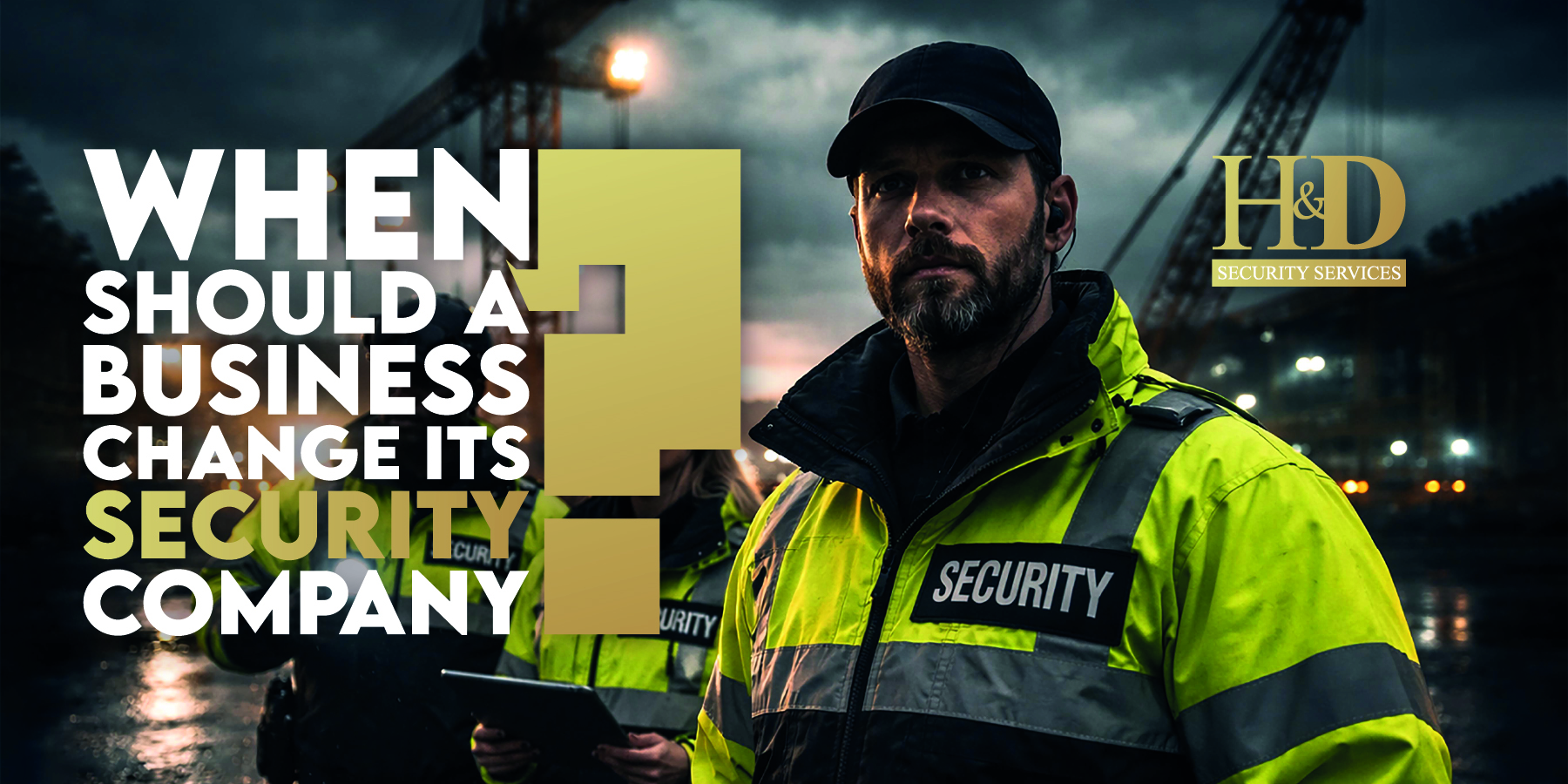
A security company should make your business feel more controlled, more organised, and better prepared for daily risks. However, if your current provider regularly misses shifts, communicates poorly, sends untrained guards, or fails to respond quickly, it may be time to change security company.
Many UK businesses stay with the wrong provider because switching feels difficult. Yet, staying with an underperforming security company can create bigger problems, including site disruption, theft, poor compliance, weak incident reporting, and damage to your business reputation.
Therefore, if your current security service no longer meets your expectations, a proper review can help you decide whether to improve the contract or move to a more professional commercial security company.
Why Businesses Often Delay Changing Security Company
Changing a security provider can feel uncomfortable, especially when your business depends on daily cover. You may worry about notice periods, service gaps, handovers, costs, or finding a better company.
However, delaying the decision can increase risk. If the same problems keep happening, your current provider may not have the management structure, training standards, or supervision needed to protect your site properly.
In many cases, businesses wait until a serious incident happens before taking action. Instead, you should review your provider as soon as performance starts to decline.
Common Signs You Need to Change Security Company
Not every issue means you need to switch immediately. However, repeated problems usually show that your provider can no longer meet your operational needs.
1. Guards Arrive Late or Miss Shifts
Late arrivals, missed shifts, and last-minute cover changes create serious problems for any business. If guards do not arrive on time, your premises may remain uncovered during key hours.
This can affect:
- Opening and closing procedures
- Staff confidence
- Access control
- Deliveries
- Visitor management
- Out-of-hours site cover
Occasional issues can happen in any service. However, repeated lateness shows weak planning and poor management.
2. You Keep Getting Different Guards
Frequent guard changes can reduce service quality. Each new guard needs time to understand your site layout, entry points, procedures, staff expectations, and risk areas.
As a result, constant staff turnover can lead to:
- Poor site knowledge
- Inconsistent rule enforcement
- Weak incident handling
- Confusion during shift handovers
- Lower visitor confidence
A reliable security company should provide consistent personnel wherever possible. Additionally, they should manage handovers properly when changes become necessary.
3. Communication Is Poor
Strong communication matters in security. If your provider does not answer calls, fails to send reports, or gives unclear updates after incidents, your business loses visibility.
Poor communication may include:
- No incident updates
- Delayed responses from supervisors
- Unclear escalation procedures
- Missing patrol reports
- Lack of management contact
- Weak communication with your team
Because security issues can develop quickly, your provider must communicate clearly and promptly.
4. Incident Reports Lack Detail
A professional security company should provide clear incident reports. These reports help your business understand what happened, when it happened, who attended, what action was taken, and what should happen next.
Weak reporting can create problems with:
- Insurance claims
- Internal investigations
- Compliance records
- Client updates
- Staff safety reviews
- Risk assessments
Therefore, if reports feel vague, late, or incomplete, your current provider may not have strong operational standards.
5. Guards Lack Professionalism
Security guards represent your business. They interact with staff, visitors, contractors, delivery drivers, and sometimes members of the public. For that reason, appearance, attitude, communication, and conduct all matter.
Warning signs include:
- Poor uniform standards
- Lack of confidence
- Poor communication skills
- Disengaged behaviour
- Failure to follow site procedures
- Weak customer service
- Unprofessional conduct
A professional commercial security company should train guards to protect your premises while also representing your business properly.
6. Your Provider Does Not Review Site Risks
Business risks change over time. Your site may become busier, your opening hours may change, your stock value may increase, or your area may face new security concerns.
A good security company should review your risks regularly. They should also recommend improvements when your current setup no longer fits.
If your provider has not reviewed your site for months or years, your security plan may no longer match your business needs.
7. Response Times Are Too Slow
Response time matters, especially for alarm activations, suspicious activity, trespassing, vandalism, and out-of-hours incidents. If your provider responds too slowly, damage may already happen before anyone arrives.
Slow response can lead to:
- Increased loss
- Higher repair costs
- More disruption
- Staff concerns
- Poor incident control
For this reason, businesses should choose a provider with clear response procedures and local support where possible.
8. Your Provider Cannot Prove Compliance
Security compliance should never rely on trust alone. Your provider should be able to prove that guards hold the correct SIA licences, have the right training, and follow proper procedures.
Before continuing with any provider, check whether they can show:
- Valid SIA licensing
- Right-to-work checks
- Insurance documentation
- Training records
- Site assignment instructions
- Incident reporting procedures
- Supervisor checks
If a provider avoids these questions, it may be time to change security company.
9. Your Business Has Outgrown the Current Service
Sometimes the provider has not failed. Instead, your business has changed. You may now need more guards, better supervision, mobile patrols, keyholding, CCTV support, or a more structured security plan.
For example, a small retail site may later expand into multiple locations. Similarly, a warehouse may add night shifts, higher-value stock, or more delivery activity.
When your business grows, your security provider must grow with it.
Risks of Staying With the Wrong Security Provider
Staying with an underperforming security company can feel easier in the short term. However, it can cost more in the long run.
Higher Risk of Theft and Damage
Weak security can give intruders, trespassers, or internal offenders more opportunity to act. If guards lack training or fail to follow procedures, your premises may face greater exposure.
Poor Staff and Visitor Confidence
Staff notice when security feels weak. Visitors and clients notice it too. As a result, poor security can affect confidence across your site.
Contract and Compliance Problems
If your provider fails to meet agreed standards, your business may face issues with clients, landlords, insurers, or auditors. This becomes especially important for commercial properties, warehouses, construction sites, retail premises, and hospitality venues.
Increased Long-Term Costs
A low-cost provider may seem attractive at first. However, poor service can create extra costs through theft, damage, downtime, complaints, replacement cover, and management time.
Therefore, the cheapest option does not always offer the best value.
What to Review Before You Change Security Company
Before switching providers, take time to review your current contract and site needs. This helps you make a controlled decision instead of rushing into another unsuitable agreement.
Review Your Current Contract
Check your agreement carefully. Look for:
- Notice period
- Termination terms
- Service-level agreements
- Performance clauses
- Early exit conditions
- Payment terms
- Scope of service
In some cases, poor performance or contract breaches may give you options to leave earlier. However, you should review the terms properly before taking action.
Identify What Is Not Working
Write down the issues you want the new provider to solve. This may include late guards, poor reporting, weak supervision, slow response, or lack of site knowledge.
Clear feedback helps the next provider build a better service from day one.
Reassess Your Current Risk Level
Your new provider should not simply copy the old setup. Instead, they should review your premises, staffing needs, operating hours, access points, and incident history.
A proper review may highlight the need for:
- Static guards
- Mobile patrols
- Keyholding
- Alarm response
- CCTV monitoring
- Door supervisors
- Event security
- Warehouse security
- Retail security
- Construction site security
This ensures your new service matches your actual risks.
How to Change Security Company Without Disruption
Switching security providers does not need to create a gap in cover. With the right process, your business can move smoothly from one provider to another.
A professional transition should include:
- Contract review
- Site risk assessment
- Clear start date planning
- Guard selection and vetting
- Site induction
- Handover notes
- Assignment instructions
- Emergency contact setup
- First-week supervision
- Ongoing performance reviews
Moreover, the new provider should communicate clearly throughout the process. This keeps your team informed and helps avoid confusion during the changeover.
What to Look for in a New Security Company
The right security company should offer more than guards. It should provide management, compliance, communication, and long-term support.
Look for a provider with:
- SIA licensed security staff
- Clear supervision structure
- Strong communication
- Proper incident reporting
- Local response capability
- Relevant sector experience
- Transparent pricing
- Flexible service options
- Professional uniforms and conduct
- Regular performance reviews
Additionally, choose a company that asks detailed questions about your business. A provider that understands your site can recommend a better security solution.
Why Choose a Commercial Security Company in London?
London businesses face different security challenges depending on location, opening hours, footfall, and property type. Because of this, local knowledge can improve both planning and response.
A professional security company in London can support:
- Offices
- Warehouses
- Retail premises
- Hotels
- Construction sites
- Vacant properties
- Events
- Commercial buildings
- Residential developments
- Hospitality venues
Furthermore, a London-based provider can often respond more effectively because the team understands local routes, risk areas, and operational challenges.
How H&D Security Supports a Smooth Changeover
H&D Security helps businesses switch from underperforming security providers with minimal disruption.
We focus on improving service quality, not just replacing guards. Therefore, our approach starts with understanding your current concerns, site requirements, and operational risks.
H&D Security can support with:
- Reviewing your current security setup
- Identifying gaps in service delivery
- Planning a smooth transition
- Providing SIA licensed security officers
- Creating clear site procedures
- Managing professional handovers
- Improving incident reporting
- Offering ongoing supervision
- Supporting commercial, warehouse, retail, hospitality, and event sites
As a result, your business can move to a more organised and accountable security service without unnecessary disruption.
Final Thoughts
You should change security company when your current provider no longer protects your business properly, communicates clearly, or adapts to your changing risks.
Repeated lateness, poor reporting, weak supervision, slow response, and compliance concerns are all warning signs. However, switching does not need to be stressful when you choose a professional provider with a clear transition process.
If your current security service is falling short, H&D Security can review your requirements and provide a tailored solution for your site.
Contact H&D Security today to discuss your current security concerns and plan a smooth move to a more professional provider.
FAQ Section
When should a business change security company?
A business should change security company when it experiences repeated late guards, missed shifts, poor communication, weak reporting, slow response, compliance concerns, or a lack of confidence in the provider. If the service no longer matches your risks, it is time to review your options.
How do I know if my security provider is underperforming?
Your security provider may be underperforming if guards arrive late, supervisors fail to respond, reports lack detail, staff feel unsupported, or site procedures are not followed. Frequent complaints and poor incident handling are also clear warning signs.
Can I change security company before my contract ends?
You may be able to change security company before your contract ends, depending on your agreement. Review the notice period, service-level terms, and termination clauses. Poor performance or contract breaches may also affect your options.
How long does it take to switch security providers?
The timeframe depends on your contract notice period, site size, staffing requirements, and risk level. However, a professional security company can usually plan the transition carefully to avoid gaps in coverage.
Will changing security company disrupt my site cover?
A well-managed transition should not disrupt your site cover. The new provider should plan handovers, prepare guards, confirm procedures, and start the service in line with your current provider’s exit date.
What should I ask a new security company before hiring them?
Ask about SIA licensing, insurance, supervision, response times, incident reporting, local experience, guard training, and transition planning. Also, ask how they will improve the issues you currently face.