When your business alarm activates late at night, who attends the site?
Many companies still rely on managers, directors, or employees to respond to alarm call-outs. However, this can place staff under pressure, delay attendance, and create unnecessary risk when the cause of the alarm is unknown.
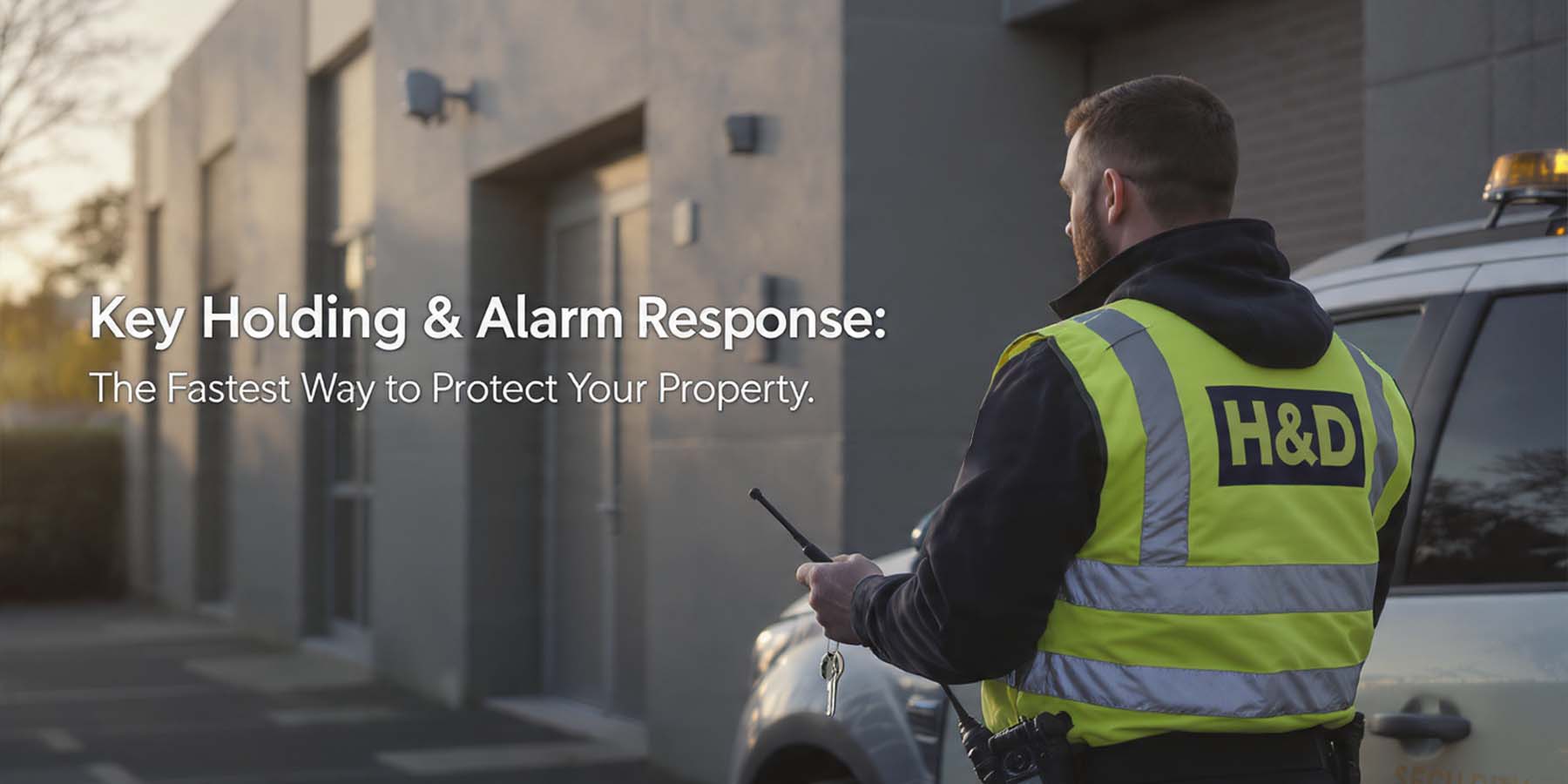
A professional key holding and alarm response service gives your business a faster, safer, and more organised solution. Instead of asking staff to attend out-of-hours incidents, a trained security officer responds, checks the premises, follows agreed procedures, and reports back with clear details.
For warehouses, offices, retail units, commercial buildings, hospitality venues, healthcare sites, schools, and vacant properties, key holding helps improve response, reduce disruption, and support better property management.
What Is Key Holding and Alarm Response?
Key holding is a professional security service where a trusted provider stores a controlled copy of your business keys. If your alarm activates or urgent site access is required, the provider sends a trained officer to attend your premises.
Alarm response means the officer visits your site after an alarm trigger, checks the property, identifies the cause where possible, and takes the correct next steps.
In simple terms, the process works like this:
- Your business provides keys to the security company
- The keys are stored under controlled procedures
- Your alarm activates or a call-out request comes through
- A trained response officer attends your site
- The officer checks external and internal areas where authorised
- Emergency services are contacted if required
- The premises are re-secured after inspection
- You receive an incident report for your records
As a result, your staff do not need to attend unknown situations alone, especially during late-night hours, weekends, or holidays.
Why Staff Should Not Handle Alarm Call-Outs Alone
At first, asking a manager or staff member to attend an alarm may seem convenient. However, alarm activations can happen for many reasons, including break-ins, vandalism, trespassing, open doors, fire risks, leaks, or system faults.
Without the right training, staff may not know how to assess the situation properly. In addition, they may arrive alone, tired, or unaware of what they could face on site.
Relying on employees can create several problems:
- Staff may attend unknown situations without support
- Travel time can delay response
- Employees may not know the correct escalation process
- Incident details may not be recorded properly
- Late-night call-outs can affect morale
- Managers may feel pressured to respond outside working hours
- Important warning signs may get missed
Therefore, outsourcing alarm response helps your business handle incidents more professionally while reducing pressure on internal teams.
How Professional Alarm Response Works
A strong alarm response process should be simple, fast, and clearly documented. H&D Security works with clients to understand their site layout, access points, alarm system, escalation contacts, and response instructions before the service begins.
Here is how professional alarm response usually works.
1. The Alarm Activates
The alarm may activate because of movement, a door contact, glass break, technical fault, or unauthorised access. Once the alert comes through, the response process begins.
2. A Security Officer Is Dispatched
A trained officer receives the call-out instruction and attends the premises using the agreed access procedure. Because key holding is already in place, the officer does not need to wait for a member of staff to arrive.
3. The Site Is Checked
The officer checks visible entry points, doors, windows, external areas, and other agreed locations. Where authorised, internal areas are also inspected.
4. The Situation Is Escalated if Needed
If the officer finds signs of forced entry, damage, suspicious activity, fire risk, or flooding, they follow the agreed escalation procedure. This may include contacting emergency services or your nominated business contact.
5. The Property Is Re-Secured
After the checks are complete, the officer locks the site, resets the alarm where appropriate, and confirms the premises are left in order.
6. You Receive a Clear Report
After attendance, your business receives an incident report. This gives you a record of the time, cause, action taken, and any recommended follow-up.
Benefits of Key Holding and Alarm Response for Businesses
A professional key holding and alarm response service offers practical value for businesses that want faster attendance, better reporting, and less pressure on staff.
Faster Response to Alarm Activations
When a security provider already holds your keys, they can attend without waiting for a manager or employee. This can reduce delays and help deal with incidents before they create further disruption.
Reduced Risk for Employees
Staff should not have to attend unknown alarm activations alone, especially at night. By using trained response officers, your business can reduce the need for employee call-outs.
Better Incident Management
Security officers follow clear procedures. Therefore, they can assess the premises, record key details, escalate issues, and secure the site in a more structured way.
24/7 Cover
Alarms do not only activate during office hours. A 24/7 key holding service gives your business support during nights, weekends, public holidays, and periods when staff are unavailable.
Clear Records for Business Use
Incident reports help your business review what happened and what action was taken. These records may also support internal reviews, maintenance checks, insurance discussions, and future risk planning.
Less Disruption for Managers
Instead of waking up managers for every alarm activation, a professional team can attend first and update the nominated contact only when needed.
Real Situations Where Alarm Response Makes a Difference
Alarm response is not only useful during break-ins. In many cases, the officer identifies small issues before they become larger problems.
Common examples include:
- A warehouse alarm activates after an attempted forced entry
- A shopfront window breaks after closing time
- A vacant property shows signs of trespassing
- An office alarm triggers because a door was not closed properly
- A water leak appears during an out-of-hours inspection
- A logistics yard reports suspicious movement overnight
- A school alarm activates during a holiday closure
In each situation, a trained officer can attend, inspect the premises, take the correct action, and provide a clear report.
Which Businesses Need Key Holding Services?
Key holding services can benefit any organisation that wants a professional response to alarm activations or urgent access requests.
This includes:
- Warehouses and logistics centres
- Retail shops and shopping units
- Offices and commercial buildings
- Hotels and hospitality venues
- Healthcare premises
- Schools and education sites
- Construction sites
- Vacant properties
- Industrial units
- Storage facilities
- Multi-site businesses
- Local authority premises
Additionally, key holding is especially useful for businesses with high-value stock, lone managers, frequent alarm activations, late opening hours, or sites that remain empty overnight.
Key Holding and Alarm Response With Other Security Services
Key holding works well as a standalone service. However, it can also support a wider security plan when combined with other services.
Mobile Patrols
Mobile patrols provide scheduled or random site checks. They can help identify issues before an alarm activates and increase visible security presence around your property.
CCTV Monitoring
CCTV monitoring allows trained staff to review activity remotely. As a result, response officers may receive useful information before arriving on site.
Manned Guarding
For higher-risk or high-value sites, manned guarding provides on-site presence during agreed hours. Key holding can then support out-of-hours incidents.
Lock-Up and Unlock Services
A security team can open and close your premises at agreed times. This helps businesses improve consistency and reduce pressure on staff.
Vacant Property Checks
Vacant sites often need regular inspections. Key holding can support access for checks, maintenance, and urgent call-outs.
What to Look for in a Key Holding Provider
Choosing the right provider matters because they will hold access to your premises and respond during important incidents.
Before choosing a company, ask:
- Do you provide 24/7 alarm response?
- Are your officers SIA licensed?
- How do you manage and control keys?
- What response areas do you cover?
- Can you support warehouses, offices, retail sites, and commercial premises?
- Do you provide written incident reports?
- How do you escalate serious incidents?
- Can you contact emergency services if required?
- Can key holding work alongside mobile patrols?
- Do you offer a tailored site response plan?
A professional provider should answer these questions clearly and explain how the service will work for your specific premises.
Why Choose H&D Security?
H&D Security provides professional key holding and alarm response services for UK businesses that need organised, reliable, and practical site support.
We help clients reduce staff call-outs, improve incident handling, and maintain better control over their premises outside normal working hours.
Our service can include:
- SIA licensed response officers
- 24/7 alarm response support
- Controlled key management procedures
- External and internal site checks where authorised
- Emergency escalation when required
- Detailed incident reporting
- Support for warehouses, retail premises, offices, hospitality sites, commercial properties, and vacant buildings
- Optional mobile patrols and manned guarding support
Because every property has different risks, we take time to understand your operating hours, access points, alarm process, nominated contacts, and reporting requirements.
As a result, your business receives a key holding service that fits your site, rather than a generic response plan.
Get 24/7 Key Holding and Alarm Response for Your Business
Your staff should not have to attend unknown alarm activations alone. With H&D Security, trained officers can respond, check the premises, follow agreed procedures, and report back clearly.
Whether you manage a warehouse, office, retail unit, hotel, school, construction site, vacant property, or commercial building, our team can provide a tailored key holding and alarm response solution.
Contact H&D Security today to discuss your site requirements and arrange a professional security assessment.
FAQ Section
What is key holding and alarm response?
Key holding and alarm response is a security service where a professional provider stores your business keys and attends your premises when an alarm activates. The officer checks the site, follows agreed procedures, re-secures the property where possible, and reports back to you.
Is key holding safer than asking staff to attend alarms?
Yes. Key holding reduces the need for staff to attend unknown situations alone, especially at night. Instead, a trained security officer responds and follows a clear process.
How quickly can an alarm response officer attend?
Response time depends on your location, traffic, site access, and service agreement. However, a professional provider should explain expected response times clearly before the service starts.
Can key holding support warehouses and commercial properties?
Yes. Key holding is suitable for warehouses, offices, retail units, industrial sites, logistics centres, vacant properties, hospitality venues, schools, and other commercial premises.
What happens if the officer finds signs of a break-in?
If the officer finds signs of forced entry, damage, or suspicious activity, they follow your agreed escalation process. This may include contacting emergency services, informing your nominated contact, and securing the premises where possible.
Can key holding work with mobile patrols?
Yes. Key holding works well with mobile patrols, CCTV monitoring, alarm monitoring, manned guarding, lock-up services, and vacant property checks. Combining services can create a stronger security plan.