
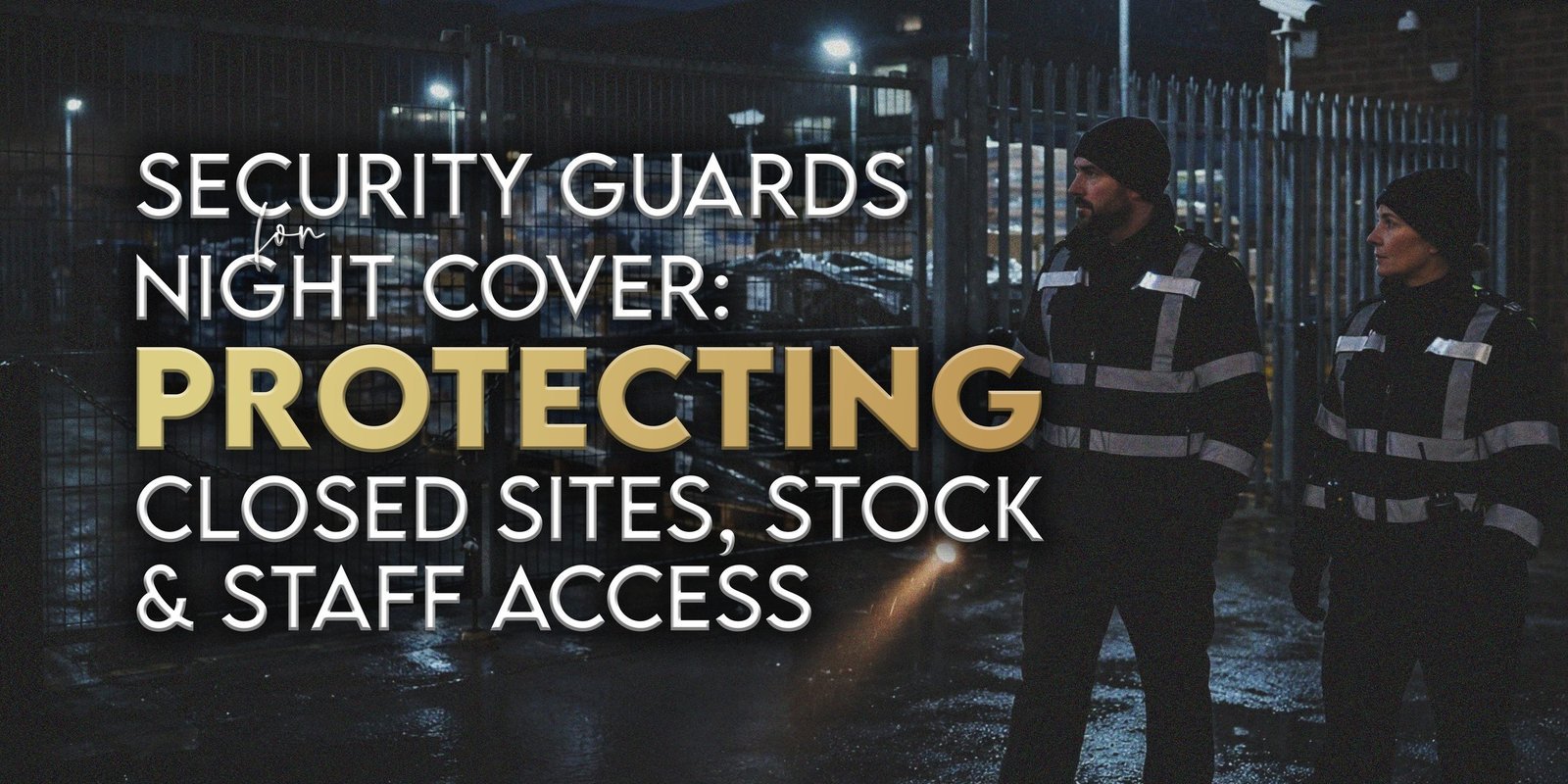
When the last employee leaves a commercial building, responsibility for its entrances, stored goods and unexpected visitors does not disappear. Warehouses may still receive overnight deliveries, contractors may need authorised entry, and retail premises can remain empty for hours. Daytime reception and supervision arrangements rarely address every situation that arises after closing.
For property managers, arranging security guards is therefore an operational decision rather than simply positioning someone at a doorway. Night-time duties need defined patrol routes, access permissions, reporting procedures and escalation contacts. H&D Security, based in Hounslow, West London, offers commercial guarding and related services. This guide explains how businesses can assess overnight cover, compare alternatives and prepare a practical guarding brief.
What Do Security Guards Do During Night Shifts?
During night shifts, security guards may check authorised access, patrol agreed parts of a property, monitor entrances, record unusual activity and follow incident escalation instructions. Their duties depend on the site’s layout, operating hours, applicable licence requirements and the agreed assignment. Clear handovers and up-to-date emergency contacts help make the service workable.
Unlike a daytime visitor desk, an overnight post may require attention to a largely closed building and occasional authorised activity. Consequently, security guards need instructions that distinguish routine movements from situations requiring a manager’s decision.
Why Businesses Hire Security Guards for Overnight Cover
Closed sites still contain stock, equipment, access systems and service entrances. In addition, a business may have cleaning teams working late, suppliers arriving early or employees moving between shifts. Security guards can support planned access procedures while providing an on-site presence during the hours specified by the client.
Night Security Guards for Warehouses and Distribution Centres
Warehouses have several distinct overnight access points: staff entrances, loading docks, vehicle gates, pedestrian routes and stock storage areas. Night security guards may check these locations according to a defined schedule, observe vehicle movements and record site activity. However, guarding duties must not interfere with authorised logistics operations or replace trained warehouse supervision.
Loading Bays, Stockrooms and External Yards
A loading bay may remain active after office hours. Therefore, security guards need a list of expected deliveries, driver identification procedures and clear rules for unexpected arrivals. They should also know which supervisor can authorise access if a vehicle appears outside its scheduled delivery window.
Stockroom entrances and external yards raise different visibility questions. A planned patrol can include agreed access points, but security guards cannot view every corner simultaneously. Businesses reviewing CCTV cameras for warehouse loading bays and stockrooms can consider how recording and monitoring may complement physical checks.
Agree Responsibilities Before the Shift Starts
After-Hours Security for Closed Retail Premises
Retail shops have a different night-time pattern. Most customer entrances close, stock remains behind locked doors and deliveries or maintenance may take place outside opening hours. Security guards may assist with documented opening and closing procedures, check agreed external points and report unusual activity rather than performing general shop-floor duties.
Retail managers should describe how the final staff member leaves, who activates the alarm and whether authorised personnel might return. For additional context, security guards for retail premises explains the wider guarding considerations for shops and retail units.
Where the assignment involves key access, staff should follow explicit instructions on custody, sign-out and escalation. Moreover, security guards should not grant exceptions simply because a visitor claims to know the manager. Each authorisation needs an approved contact or a documented procedure.
Commercial Guarding for Business Parks and Industrial Sites
Industrial sites may add outdoor machinery, fenced yards and loading zones. However, the guarding brief should reflect which facilities are active overnight. Security guards might check a vacant unit’s agreed perimeter while avoiding areas used by another tenant’s authorised night shift.
SIA Night Guards and Licensing Responsibilities
For contracted frontline guarding in the UK, the activities performed determine the relevant SIA licence. Security guards engaged to guard property or premises against specified threats will generally need an appropriate licence where the work is licensable. However, different SIA licence categories do not authorise every activity in the same way.
For instance, CCTV duties can involve separate licensing considerations depending on what the operator monitors and why. Therefore, businesses asking about SIA night guards should specify whether the assignment involves guarding, door supervision, CCTV viewing or keyholding. The supplier can then discuss the relevant personnel requirements without assuming one licence covers everything.
The Security Industry Authority’s official licensing guidance explains the distinctions. Site managers should also confirm identification rules, reporting duties and the instructions officers must follow throughout the shift.
Controlling Staff and Contractor Access After Hours
After-hours security depends on knowing who has permission to enter, when they may enter and who can approve exceptions. Security guards should have a current authorised-person list or another agreed verification process, particularly where several organisations share the premises.
Employees, Cleaners and Maintenance Contractors
Cleaners, technicians and early-shift employees may require different doors, escorts or reporting instructions. Security guards should follow the agreed procedures rather than interpret vague requests independently.
Deliveries and Unexpected Call-Outs
Drivers sometimes arrive earlier or later than expected. Instead of assuming every delivery is authorised, security guards can follow the operator’s verification process and contact the nominated site representative. Emergency contractors likewise need clear instructions about identification, entry permissions and any required supervision.
Comparing Security Guards, Mobile Patrols and CCTV Monitoring
Businesses should compare overnight arrangements according to the tasks involved, not assume different services offer identical cover. Security guards provide a physical presence at the agreed site; mobile patrol officers attend at scheduled or instructed intervals; CCTV can record images or support monitoring according to its specification.
| Arrangement | Typical Role | Suitable Requirement | Important Limitation | Question to Ask |
|---|---|---|---|---|
| On-site night guards | Access checks, patrols, reporting | Continuous physical presence during agreed shifts | Duties limited to assignment | Which posts and hours are covered? |
| Mobile patrols | Periodic site visits and checks | Sites requiring visits rather than continuous cover | Officer is not permanently present | How are visits and reports arranged? |
| Recorded CCTV | Stores footage for later review | Visibility and incident records | No automatic live observation | Who can access recordings? |
| Live CCTV monitoring | Agreed active observation and escalation | Locations needing defined monitoring periods | Depends on monitored views and procedures | Which hours and alerts are included? |
| Keyholding and alarm response | Agreed keys and attendance procedures | Managing alarm activations | Attendance conditions vary | Who authorises entry and response? |
| Combined service | Defined guarding plus monitoring or patrols | Multiple site requirements | Scope must be specified separately | How do teams communicate? |
Before choosing security guards or a remote service, define who makes decisions after an alert and what the reporting process looks like. An alarm notification, for example, does not automatically include an on-site response unless the arrangement specifies one.
Review Your Site’s Overnight Guarding Requirements
To discuss a realistic specification, provide the property address, operating hours, entrances, stock areas, expected deliveries, patrol requirements and emergency contacts. H&D Security can consider these details alongside the number of security guards requested and any CCTV, alarm or keyholding arrangements. A clear description of the night shift also helps distinguish continuous guarding from occasional patrol visits.
If you manage a warehouse, shop or commercial building, you can request a night security quote with the proposed dates and duties.
CCTV Cameras for Warehouse Loading Bays and Stockrooms
Camera coverage can help managers review agreed areas such as stockroom entrances, external gates, delivery lanes and goods movement points. However, CCTV recording is not the same as continuous live monitoring, and a camera view may be restricted by lighting, vehicle positions or shelving.
When evaluating security guards alongside technology, decide whether the requirement is to record activity, monitor live footage, undertake a physical check or combine these tasks. Our related guide to warehouse camera coverage for stock areas explores placement considerations for logistics sites.
Managers should also identify who may view footage, how incidents are reported and whether existing equipment can support the intended arrangement. In addition, cameras for loading bays and stockrooms may need separate planning from the physical duties of overnight officers.
Security Guards in Hounslow and West London
H&D Security is based in Hounslow and discusses commercial guarding requirements with businesses around West London and the Heathrow area. Relevant premises include warehouses in Feltham or Hayes, commercial sites in Brentford and offices or retail units in Ealing, Southall, Richmond and Twickenham. These are geographical examples, not promises of immediate coverage at every site.
Common Mistakes When Planning Night Security
A recurring problem is treating daytime procedures as adequate night instructions. When reception closes, its normal authorisation contacts may not be available. Therefore, security guards should have separate out-of-hours escalation contacts and a defined process for exceptions.
Other mistakes include:
- Unclear patrol routes: Identify areas, boundaries and agreed checking intervals.
- Incomplete access lists: Keep authorised employees, contractors and delivery instructions current.
- Weak shift handovers: Record outstanding issues and unusual events before officers change.
- Assuming footage is monitored: Confirm whether CCTV is recorded, watched live or both.
- Missing alarm responsibilities: Specify who receives alerts and who may enter the building.
- Overlooking retail closing activity: Consider retail security guarding arrangements when staff leave late.
- Poor reporting expectations: Agree what information belongs in the daily incident or activity log.
What Should Businesses Include in a Night Guarding Brief?
A useful brief gives security guards the information needed to understand the post before their first shift. Rather than requesting “one guard overnight”, describe the premises and the responsibilities that matter to operations.
- Site and contact details: Full address, entrances, reporting point and duty manager.
- Shift specification: Dates, start and finish times, number of officers and handover expectations.
- Access permissions: Staff lists, contractor schedules, visitor verification and exceptional-entry authorisation.
- Patrol instructions: Areas to inspect, route restrictions, stockrooms and loading bays.
- Existing systems: CCTV locations, alarms, access cards and available reporting equipment.
- Incident procedures: Escalation contacts, reporting format and responsibilities after alerts.
- Licensing and duties: Relevant SIA requirements and tasks included in the assignment.
- Site logistics: Parking, welfare access, lighting and any known restrictions.
For retail premises with closing and reopening activity, the business can also review guarding support for shops and retail units before finalising the brief. Security guards should receive the approved version and know when changes take effect.
How H&D Security Supports Night-Time Commercial Guarding
H&D Security offers relevant commercial services including SIA-licensed officers, manned guarding, mobile patrols, keyholding, alarm response, CCTV monitoring and control room support. Employers can discuss the combination that matches their site without assuming every option is included in a standard guarding assignment.
For instance, a warehouse might request security guards for vehicle access while considering CCTV for loading areas. A closed office may instead ask about scheduled patrols and keyholding. To explore a site-specific arrangement, discuss your overnight guarding requirements and outline the exact duties and coverage period.
Frequently Asked Questions
What Do Security Guards Do During Overnight Shifts?
Security guards may check authorised access, patrol agreed areas, log site activity, inspect specified entrances and follow escalation instructions. Their actual responsibilities depend on the property and service specification. A warehouse with deliveries may need different procedures from a closed office, so managers should provide site plans, contact details and clear reporting requirements.
When Should Businesses Hire Night Security Guards?
Night security guards may suit premises requiring an agreed physical presence after normal working hours, particularly where staff access, stock storage or late deliveries need attention. However, continuous guarding is not automatically necessary for every building. Managers should compare operating patterns, site layout, existing systems and alternative arrangements before choosing the service.
How Does After-Hours Security Work for Closed Retail Sites?
After-hours security can involve documented closing checks, controlled access for approved personnel, patrols and incident reporting. The exact duties depend on the retail unit and contract. Before arranging cover, managers should identify who closes the premises, where stock is stored, who may enter overnight and which contacts handle unexpected visits or alarms.
What Should Employers Check When Booking SIA Night Guards?
Employers should describe the actual tasks, not merely request a generic SIA badge. Different frontline activities can require different licence categories, so the supplier should assess relevant licensing against the assignment. Check the shift hours, officer duties, site access, reporting format and escalation arrangements, and consult official SIA guidance for licensing distinctions.
Can CCTV and Mobile Patrols Complement Commercial Guarding?
Yes. Recorded CCTV may support later review, monitoring can provide agreed live observation, and mobile patrols can conduct visits to the premises. These services can complement security guards where the site specification calls for them, but they do not provide identical coverage. Confirm who receives alerts, when visits occur and who is responsible for following up incidents.
Does H&D Security Provide Night Guarding in Hounslow and West London?
H&D Security is a Hounslow-based commercial security provider offering guarding and related services. Businesses around Heathrow and West London can enquire about overnight arrangements for warehouses, offices, shops and industrial sites. The proposed cover depends on the premises, shift dates, duties and personnel requirements; availability and commercial terms need to be discussed directly.
Discuss Your Night Security Requirements With H&D Security
Overnight guarding is most useful when every party understands the building, access rules and response procedures. H&D Security, based in Hounslow, can discuss site-specific requirements with warehouse operators, retail businesses and commercial property managers in West London. Whether you need security guards for a regular night shift or a defined closure period, start with the location, hours, patrol areas and authorised visitors.
You can also explain any existing CCTV, alarm or keyholding requirements so the proposed service reflects the premises. Contact 0208 476 7676 or info@handdsecurity.co.uk, or get a night security quote.