
Warehouse Security Services for Temporary Storage Sites: Managing Access During Seasonal Expansion
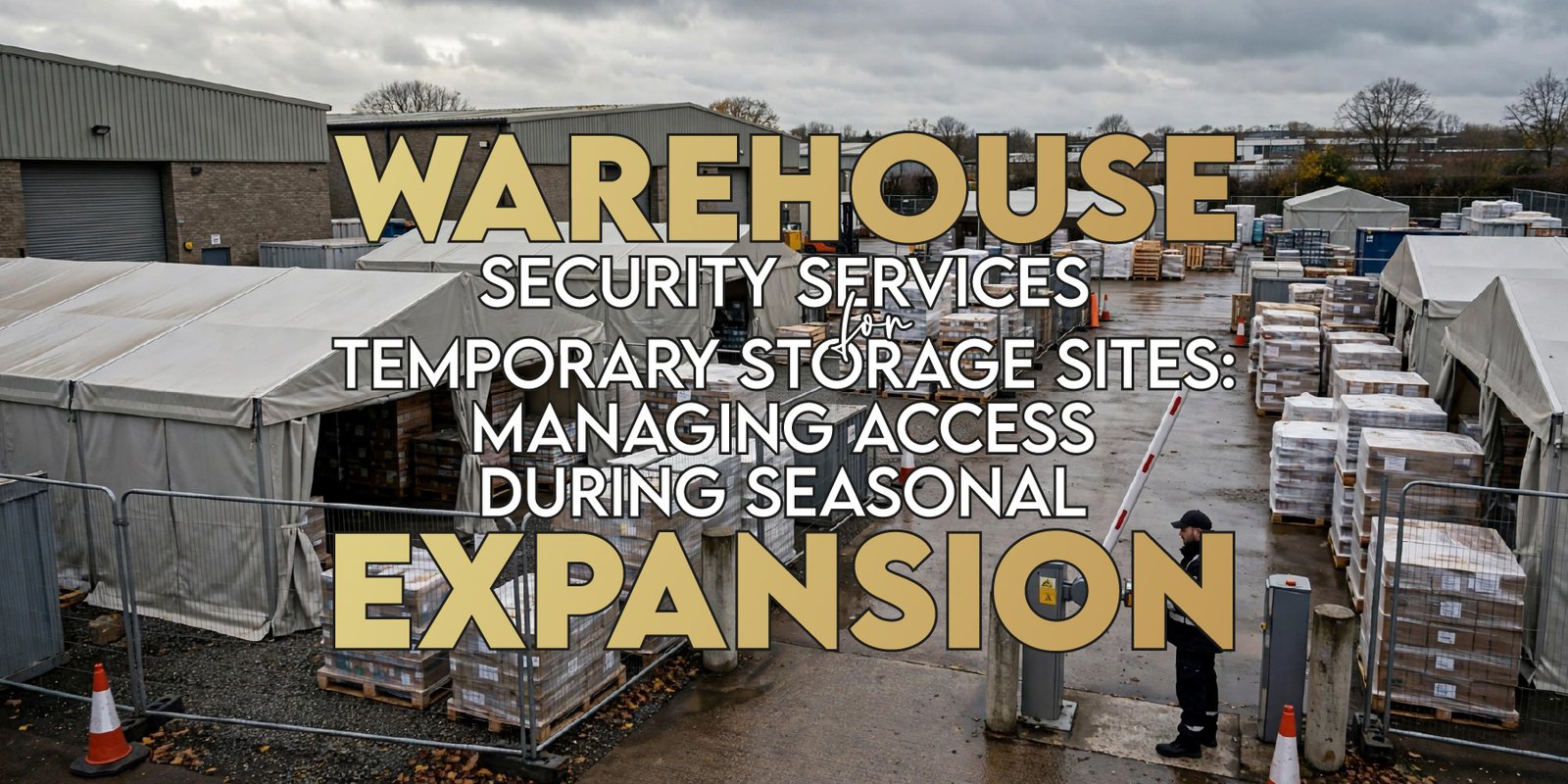
Warehouse security services need to be reviewed when a business opens an overflow site for seasonal demand. A temporary building or rented yard may have different access arrangements, lighting and communications from the main depot. Seasonal storage protection starts by identifying those differences before stock arrives.
Survey the temporary premises
Walk the boundary, entrances, loading points and pedestrian routes with the person responsible for the site. Record damaged fencing, unreliable doors and areas where lighting or visibility needs attention. Check which repairs belong to the landlord and which arrangements the occupier must make.
A short lease does not make an unclear access process workable. Temporary storage security needs a named owner, a current contact list and instructions that fit the actual location.
Control access between the main and overflow sites
Agree how drivers, agency workers and visiting contractors are authorised. A person who works at the main depot may still need an induction and permission for the overflow location. Explain how the gate team verifies a collection and who resolves discrepancies in a transfer reference.
Overflow warehouse guarding should also cover the end of a shift. Confirm who checks that visitors have left, who secures the premises and how keys or access credentials are handed over.
Match coverage to the changing timetable
Seasonal operations may extend into evenings or weekends as volumes change. Review the guarding brief when opening hours, stock locations or delivery patterns change. Do not assume a daytime patrol arrangement provides continuous overnight cover.
- Identify staffed hours and periods when the site is closed.
- Define gate duties, patrol boundaries and reporting contacts.
- Agree break cover for posts requiring continuous attendance.
- Document the process for unplanned arrivals.
- Provide a safe route for staff arriving or leaving after dark.
Specify temporary logistics security clearly
Separate physical guarding from alarm response, CCTV installation and remote monitoring in the quotation. Confirm which services exist at the temporary site and who responds if equipment fails. Officers should know the approved contingency rather than assume the main depot’s systems cover the additional premises.
Review warehouse guarding services when defining the scope. Before mobilisation, verify licences for the assigned activities using the SIA register, then arrange a location-specific induction.
Treat the overflow site as a separate operation
An overflow warehouse may look similar to the main premises while operating under very different arrangements. The landlord may control the outer gate, another tenant may share the yard, and the occupier may be responsible only for a particular unit. Establish those boundaries before planning cover. Identify which doors, routes and external areas form part of the assignment, and who can authorise changes affecting the shared space.
Prepare a short site profile that the security provider can actually use. Include the address, access arrangements, working hours, principal activities and relevant management contacts. Explain how the temporary site connects with the main depot, including who approves transfers and how delivery information is passed between them. Avoid relying on informal knowledge held by one warehouse supervisor. If that person is absent, the gate team still needs a reliable way to confirm a visitor or resolve an unexpected collection without guessing which business process applies.
Clarify landlord, tenant and contractor responsibilities
Temporary occupancy can create uncertainty about repairs and site infrastructure. A broken external light may belong to the landlord, while a temporary access system may be supplied by the tenant's contractor. Record who receives fault reports and who can approve interim measures. Guards should not be left to decide whether a defect is sufficiently serious to justify work that they have no authority to commission.
Include practical issues such as keys, alarms, utilities and out-of-hours contacts in the mobilisation discussion. Confirm which services are already operating and which are still being installed. If a system is not available on the first day, the guarding plan should reflect that fact rather than assume completion. Keep the responsibilities in a form that supervisors can refer to during a shift. This is particularly useful when several suppliers are working at the premises and each expects another organisation to deal with an unresolved access or equipment issue.
Build a controlled staff and visitor entry process
A seasonal expansion may bring agency workers, contractors and supervisors who do not normally work together. Establish how authorised people are identified and how visitors are expected to arrange access. The process should be practical for the volume of arrivals but still provide a clear route for exceptions. A guard should know who can confirm a new worker's expected attendance and what to do if the relevant contact is unavailable.
Induction and access permission are connected but separate. Someone may be authorised to visit while still needing a site briefing before entering an operational area. Identify who provides that briefing and whether an escort is required. Security personnel should not be expected to deliver specialist warehouse training merely because they control the entrance. When temporary access credentials are issued, confirm how they are returned or withdrawn at the end of the assignment. This prevents an expansion project from leaving behind permissions that no longer have a business purpose.
Keep stock-transfer decisions with authorised managers
Movements between the main depot and overflow storage can create confusion when a driver arrives with incomplete information. Agree the documents or references the site uses and the person who resolves discrepancies. The security team's role may include checking that the approved process has been followed, but it should not include deciding whether a commercial transfer is valid without the required authority.
Consider both incoming and outgoing movements. A collection may be expected at one site but arrive at the other, or a transfer may be postponed after a vehicle has been booked. Give guards a current contact and a clear waiting arrangement while the query is resolved. Avoid relying on a driver's familiarity with the business as a substitute for authorisation. Record the outcome through the approved system, including the manager who supplied the instruction where required. Consistent records help the warehouse team reconcile movements without turning the guard into an inventory controller.
Review external areas during the hours they are used
A daytime inspection may not reveal the conditions staff face at an early start or late finish. Review the approach to the building, pedestrian routes and working positions under the conditions relevant to the assignment. Identify lighting, communication or access problems for the responsible manager to address. Guards need suitable instructions for their own work, including how to report a concern without entering an area beyond their training or competence.
Where the temporary premises share an industrial estate, distinguish the occupier's controls from those of the estate manager. A patrol within the rented unit may not include the common road or neighbouring yards. Explain how concerns in those areas are referred. If additional observation or cover is proposed, define its location, hours and purpose clearly. Seasonal storage protection should be based on the actual boundaries and operating pattern, rather than a broad assurance that a security presence covers everything in the surrounding area.
Design handovers for changing seasonal operations
The temporary site's layout and timetable may change as stock volumes rise. A handover should capture the changes that affect access and guarding, such as a new loading point, a closed door or an additional contractor visit. Identify who authorised the change and whether it is temporary. The incoming shift should not have to infer the current arrangement from a mixture of old notices and verbal comments.
Keep unresolved matters visible. If a key has not been returned or a visitor remains inside after the expected departure time, record the responsible contact and the action already taken. Distinguish facts from concerns that still need verification. A concise handover can provide continuity without copying unnecessary personal information into several systems. Supervisors should periodically review whether the briefing remains current, particularly after a major change in opening hours. A temporary site often evolves quickly, so an instruction issued on the first day may need revision before the final week.
Agree what happens outside the staffed period
An assignment covering working hours does not automatically provide protection after the last officer leaves. Confirm who secures the premises, receives alarms and responds to an out-of-hours concern. If separate key holding, alarm response or monitoring services are required, discuss them explicitly and identify the provider responsible for each. Do not assume that an arrangement at the main warehouse extends to a new address.
The closing procedure should identify what the officer checks and who receives the final handover. If an agreed check cannot be completed, report the reason rather than marking it complete. The responsible manager should decide the next step. Consider how the plan changes if staff work late or a delayed collection extends beyond normal hours. Set out the process for requesting additional cover and confirm availability; an unplanned extension should not silently become an expectation that a single officer remains indefinitely without appropriate arrangements.
Prepare an orderly demobilisation
Seasonal storage often ends gradually, with stock transfers, cleaning and contractor visits continuing after routine operations stop. Agree the final security period against those activities. A calendar end date is not enough if the site still contains equipment or people who need access. Confirm who takes responsibility for the premises when the guarding assignment ends and what information they require.
The final handover should cover outstanding faults, access credentials, keys and any unresolved incidents relevant to the responsible organisation. Handle records according to the agreed retention and transfer arrangements rather than leaving copies at an empty office. If the landlord is taking possession, clarify the handover process between authorised representatives. Guards can support the agreed access arrangements, but they should not be expected to settle contractual questions about the condition of the premises. Planning the exit from the start reduces the chance that the last day becomes a collection of improvised decisions.
Compare quotations using the same temporary-site brief
Provide each prospective provider with the same hours, locations and duties. Explain which posts need continuous attendance, whether patrols are required and how breaks will be covered. Ask what supervision, reporting and mobilisation are included. A lower figure may reflect fewer duties or shorter coverage rather than a more efficient version of the same service, so compare the underlying scope before comparing the total.
Include the expected duration and the process for extending or reducing the assignment. Seasonal demand can change, but the contract should make the procedure clear. Ask how replacements are briefed and how the provider verifies personnel for the assigned activities. When discussing temporary logistics security with H&D Security, share the site profile and any known differences from the main warehouse. That gives the provider a concrete basis for discussing suitable cover, rather than expecting a generic warehouse package to fit premises that are still being brought into use.
## Check readiness before the first stock arrival
A readiness discussion should confirm that the entrance process, management contacts and agreed security duties are usable on the first operating day. Identify any work still outstanding and the person responsible for it. Do not mark the site ready merely because the building is available or the guarding shift has been booked. Access instructions, communications and the handover arrangement need to fit together.
Walk through an ordinary arrival and departure using the approved process. Confirm who authorises a visitor, where a driver reports and how an unexpected request is referred. Check that the security team can reach the relevant contact during the actual hours of operation. Record unresolved matters and the approved temporary arrangements. This is a practical coordination check rather than a substitute for the site's wider assessments or specialist inspections. Its purpose is to ensure that the people starting work have clear instructions and do not have to construct the access process around the first vehicle waiting at the gate.
Frequently asked questions
Can the main warehouse instructions be reused?
They can provide a starting point, but access routes, equipment, hazards and contacts need to be checked for the temporary site. Issue a revised brief that officers can use on location.
What happens when seasonal storage ends?
Plan final collections, contractor access, key return and the last security handover. Confirm who takes responsibility when the guarding assignment finishes, rather than relying on an assumed closing date.
Discuss your London security requirements
When choosing a security company in London, provide the site address, operating hours, required duties and the person responsible for decisions. H&D Security can discuss a suitable scope and personnel availability. Request a security quotation with your dates, site layout and reporting requirements so that the proposed cover reflects the work involved.