
Warehouse Security Services for Distribution Yards: Managing Trailers, Gates and Vehicle Access
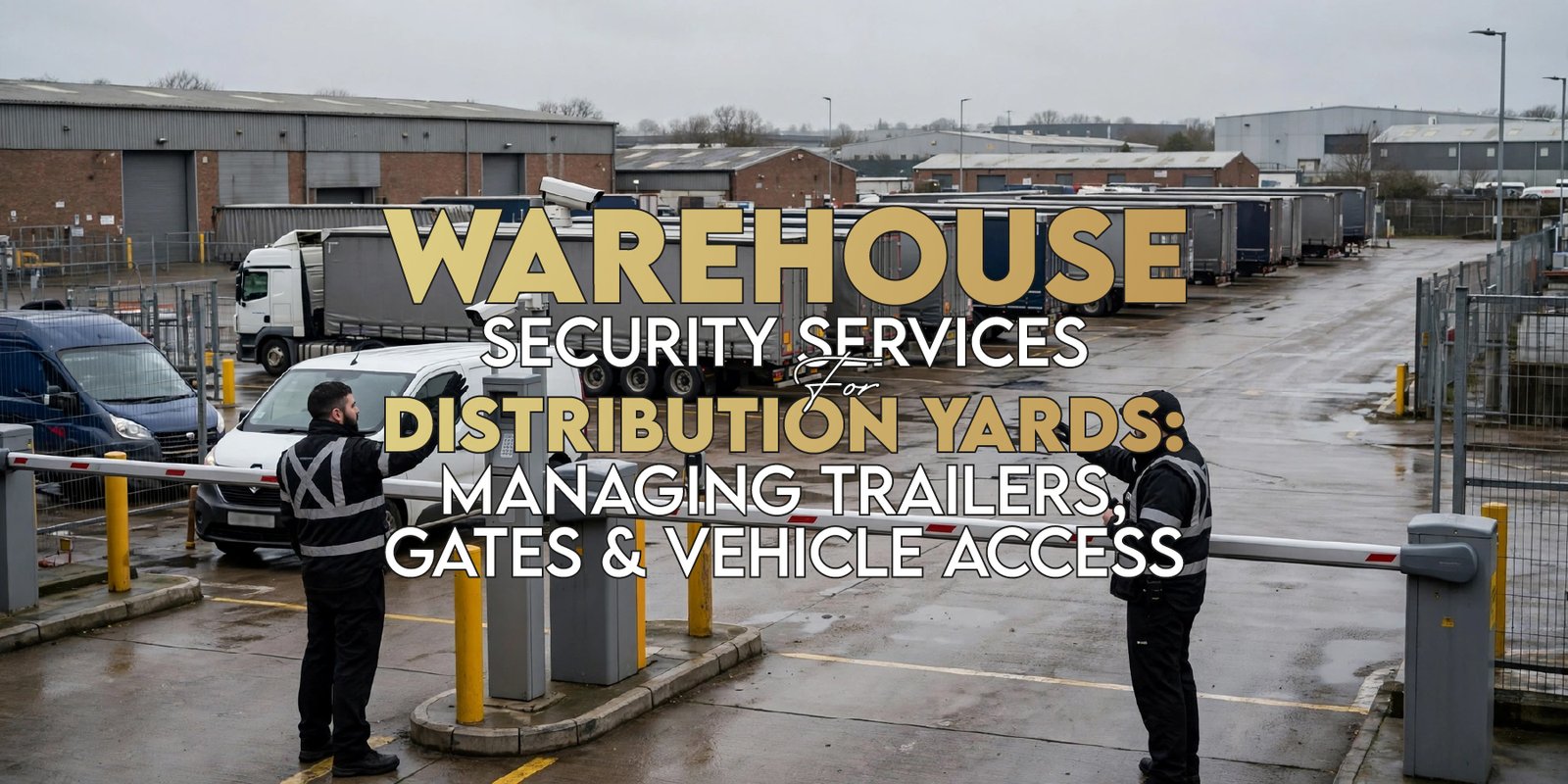
A distribution centre receives several HGV deliveries while outbound trailers wait for collection. Meanwhile, contractors arrive through the vehicle entrance, warehouse teams prepare dispatch orders and drivers report to the gatehouse.
Without clear access procedures, coordinating these activities can become challenging.
Warehouse security services can help distribution centres manage agreed entry requirements, observe relevant site activity and report incidents to warehouse management.
However, effective warehouse security involves more than placing an officer at the entrance. Businesses should consider trailer parking areas, loading bays, staff access, CCTV arrangements and communication with transport teams.
H&D Security, a commercial security provider based in West London, offers relevant guarding services for warehouses and logistics premises.
This guide explains how warehouse security services can support distribution yards, vehicle access and site operations while maintaining clear responsibilities between security officers and logistics management.
What Do Warehouse Security Services Include for Distribution Yards?
Warehouse security services may include gatehouse guarding, authorised vehicle access procedures, site patrols, trailer yard observation, incident reporting and communication with warehouse management. The precise duties depend on the facility, operating hours, risk assessment and agreed contract. Security personnel follow established site procedures rather than independently managing transport operations.
For example, a distribution centre may require gatehouse observation during delivery periods, while another site may need additional guarding for overnight operations.
Therefore, businesses should define their requirements before arranging warehouse security services.
Warehouse Security Services for Trailer Yards
Trailer yards are important operational areas for transport and logistics businesses.
They may accommodate articulated trailers awaiting loading, collection or onward movement.
Therefore, warehouse security services can include observation of designated trailer parking areas and reporting concerns according to agreed procedures.
Relevant Trailer Yard Responsibilities
Depending on the assignment, personnel may:
Observe designated vehicle access points
Follow approved visitor and driver procedures
Report unusual activity
Record relevant incidents
Communicate concerns to transport management
Carry out agreed site patrols
Observe restricted access areas
Follow relevant overnight guarding instructions
However, security officers should not automatically assume responsibility for trailer inventory, fleet scheduling or vehicle allocation.
These functions normally belong to the relevant logistics and transport teams.
Warehouse security services should complement those processes rather than replace them.
Trailer Yard Monitoring: What Should Operators Consider?
Trailer yard monitoring can involve several different activities.
For example, on-site officers may observe designated areas, while CCTV personnel monitor relevant camera feeds where the service has been agreed.
Meanwhile, transport managers may use separate operational systems to record trailer movements.
These activities should not be confused.
Observation vs Fleet Management
Visual observation supports site awareness and incident reporting.
However, it does not provide the same functionality as specialist trailer-tracking software or GPS fleet-management systems.
H&D Security should not be assumed to supply these technologies through ordinary guarding services.
Instead, warehouse security services should define how security personnel communicate relevant observations to the designated transport or warehouse manager.
Clear reporting responsibilities help avoid unnecessary duplication.
Warehouse Gate Security: Managing Vehicle and Driver Access
Warehouse gate security is particularly relevant at distribution centres receiving regular HGV deliveries and collections.
A gatehouse officer may follow agreed procedures to identify arriving visitors and communicate with warehouse personnel.
However, the site operator should determine the actual admission rules.
Typical Gatehouse Duties
Warehouse security services may cover:
Observing authorised vehicle arrivals
Following driver reporting procedures
Checking relevant access information
Recording agreed entry details
Contacting warehouse supervisors
Following contractor access arrangements
Escalating exceptions
Recording incidents
Supporting agreed visitor procedures
For example, where an unexpected vehicle arrives, an officer should follow the site's escalation process rather than independently changing the delivery schedule.
Furthermore, security guards should not be treated as traffic marshals or transport planners.
Their responsibilities must remain within the agreed guarding assignment.
Distribution Centre Security for Goods-In and Dispatch Areas
Distribution centre security requires an understanding of different warehouse operating areas.
Goods-in teams manage arriving deliveries, while dispatch departments coordinate outgoing consignments.
Loading bays may serve both activities at different times.
Consequently, warehouse security services should consider how authorised personnel enter these operational zones.
Goods-In Security Considerations
Relevant requirements may include:
Delivery-driver reporting
Restricted warehouse entrances
Approved contractor access
Incident reporting
Communication with goods-in supervisors
Dispatch Security Considerations
Dispatch areas may require observation of agreed access points and procedures for reporting unusual activity.
However, warehouse guards should not automatically manage loading schedules, stock allocation or dispatch paperwork.
Those duties belong to operational personnel unless a separate, appropriate arrangement specifies otherwise.
Logistics Site Guarding for Loading Bays and Vehicle Routes
Logistics site guarding should operate alongside the warehouse's established vehicle and pedestrian procedures.
Loading bays involve vehicle movement, warehouse personnel and handling equipment.
Therefore, clear operational boundaries are essential.
Warehouse security services may support access observation and reporting, but specialist vehicle-marshalling and loading activities remain separate responsibilities.
For example, a security officer might report an access concern to the duty manager rather than directing an HGV into a loading position.
Site managers should establish:
Authorised access procedures
Reporting contacts
Vehicle and pedestrian arrangements
Loading-bay responsibilities
Contractor access requirements
Relevant site induction procedures
Additionally, the warehouse's workplace transport risk assessment should guide the operational arrangements.
Warehouse CCTV Monitoring vs On-Site Security Officers
CCTV monitoring and physical guarding can provide complementary services where appropriate.
Warehouse security services involving on-site officers may support entrance observation, patrols and incident reporting.
Meanwhile, CCTV monitoring personnel may review camera feeds and report relevant concerns.
However, not every guarding contract includes CCTV monitoring.
Understanding CCTV Requirements
Commercial premises may use cameras around:
Vehicle entrances
Loading-bay approaches
External yards
Warehouse access points
Restricted areas
The correct monitoring arrangement depends on the camera purpose and relevant licensing requirements.
For a related comparison, read about CCTV monitoring considerations for shops and stockrooms.
That article focuses on retail and stockroom CCTV rather than trailer tracking.
Importantly, an SIA Security Guard licence does not automatically cover every form of public-space surveillance activity. The licence required depends on what the operator actually monitors and why.
Warehouse Security Services During Overnight Operations
Some logistics sites operate overnight, with trailers arriving or leaving outside conventional business hours.
In these circumstances, warehouse security services may require different reporting and access arrangements from daytime operations.
Relevant considerations include:
Overnight gate activity
Trailer parking areas
Out-of-hours deliveries
Warehouse shift changes
External premises access
Incident reporting
Communication with duty managers
However, security officers should follow the agreed procedures rather than assume responsibility for managing the entire night shift.
Furthermore, businesses should establish how incidents and access concerns pass between outgoing and incoming personnel.
Distribution Yard Security Planning for Hounslow and Heathrow Logistics Sites
West London contains commercial estates, warehousing operations and logistics facilities serving a variety of businesses.
Relevant locations include Hounslow, Heathrow, Feltham, Hayes, Southall, Brentford, Ealing, Park Royal, Greenford, Uxbridge and Slough.
Warehouse security services may be relevant to facilities operating across these commercial areas.
However, the correct arrangement depends on site access, vehicle movements and operating hours rather than location alone.
H&D Security is based in West London and supports relevant commercial guarding enquiries.
The company should not be assumed to have separate offices in every surrounding area or guaranteed availability for every proposed assignment.
How Many Security Guards Does a Distribution Yard Need?
There is no universal guard-to-vehicle ratio suitable for every warehouse or distribution yard.
The relevant warehouse security services depend on the premises, risk assessment and required duties.
Factors include:
Number of vehicle gates
Site operating hours
Warehouse entrances
Trailer parking layout
Delivery and collection activity
Loading-bay arrangements
Staff access points
Patrol requirements
CCTV coverage
Incident reporting needs
For example, a small warehouse with one access gate may require a different guarding arrangement from a multi-building distribution facility.
Therefore, employers should review the actual site requirements before requesting personnel.
Comparing Three Warehouse Security Scenarios
The following examples are hypothetical and illustrate why warehouse security services should differ between locations.
Single-Gate Warehouse
A small warehouse operates one main entrance for staff, delivery drivers and visitors.
Its guarding plan may focus on agreed access procedures and reporting contacts.
Large Distribution Centre
A larger facility has several loading bays, vehicle entrances and trailer parking areas.
The operator may need to clarify separate responsibilities for gatehouses, goods-in and dispatch access.
Overnight Logistics Yard
An overnight yard continues receiving and releasing vehicles outside conventional hours.
The site plan may require specific shift handover arrangements and communication with the duty transport manager.
These examples demonstrate why warehouse security services should be based on premises requirements rather than a standard package.
Common Warehouse Security Planning Mistakes
Several avoidable mistakes can create confusion between security officers and logistics teams.
Unclear Guarding Duties
Specify whether the assignment involves gatehouse observation, access procedures, patrols or another agreed responsibility.
Missing Gatehouse Instructions
Officers should receive relevant site instructions and management contacts.
Poor Communication With Transport Teams
Warehouse security services should complement transport procedures rather than independently direct delivery operations.
Incomplete Shift Handovers
Incoming personnel need relevant access updates and incident information.
Confusing CCTV and Physical Guarding
The two services have different functions and may involve different licensing requirements.
Businesses reviewing restricted stock areas can also explore comparing CCTV coverage across commercial stock areas.
Overlooking Visitor Arrangements
Contractors, delivery drivers and office visitors may follow different access procedures.
For related guidance, review comparing visitor access across commercial premises.
What Should Logistics Managers Prepare Before Requesting Warehouse Security?
A detailed brief helps define warehouse security services accurately.
Managers should prepare:
Site address and operating hours
Number of vehicle entrances
Warehouse and yard layout
Trailer parking areas
HGV access requirements
Delivery and collection activity
Proposed guarding shifts
Relevant patrol areas
Existing CCTV arrangements
Driver and visitor procedures
Incident reporting expectations
Duty manager contacts
Assignment duration
Required start date
Relevant site rules
Additionally, employers should explain any differences between daytime and overnight operations.
This information helps determine suitable warehouse security services without relying on generic assumptions.
Warehouse and Distribution Yard Security Checklist
Before finalising warehouse security services, review:
Identify vehicle entrances and exits.
Review trailer parking areas.
Define gatehouse responsibilities.
Confirm operating hours.
Identify loading-bay access points.
Prepare delivery-driver procedures.
Establish relevant reporting requirements.
Review CCTV monitoring arrangements.
Identify agreed patrol areas.
Confirm escalation contacts.
Clarify warehouse management responsibilities.
Prepare site induction information.
Establish shift handover procedures.
Review relevant SIA licensing requirements.
Provide the guarding brief to the supplier.
For businesses comparing different commercial monitoring environments, CCTV cameras for stockrooms and commercial premises may provide additional background.
Likewise, reception guarding and visitor access procedures can help explain the differences between general visitor management and gatehouse operations.
1. What do warehouse security services include for distribution yards?
Warehouse security services may involve gatehouse guarding, agreed vehicle access procedures, site patrols, trailer yard observation and incident reporting.
However, the actual duties depend on the site, contract and operational requirements.
Security officers should follow established warehouse procedures and communicate concerns to authorised management personnel.
2. How can guards support trailer yard monitoring?
Guards may observe designated trailer parking areas, follow approved access procedures and report relevant concerns.
However, visual observation should not be confused with specialist fleet-management software or GPS trailer tracking.
The warehouse operator should define the reporting process and retain responsibility for transport scheduling and trailer inventory management.
3. What does warehouse gate security involve?
Warehouse gate security may include observing vehicle arrivals, following driver reporting procedures, checking agreed access information and recording relevant incidents.
However, officers should work within the site's established authorisation process.
Transport managers remain responsible for logistics decisions, while security personnel perform their contracted guarding duties.
4. Can security officers check delivery-driver access?
Yes, where the assignment includes relevant access procedures.
Security officers may follow agreed driver reporting instructions and communicate with authorised warehouse personnel.
However, they should not automatically approve changes to delivery schedules or direct specialist vehicle movements.
The site's management team should establish the appropriate responsibilities.
5. How does distribution centre security differ from general commercial guarding?
Distribution centre security may involve HGV access, trailer parking areas, loading bays and multiple warehouse entrances.
Meanwhile, general commercial guarding may focus on offices, reception areas or other business premises.
The appropriate warehouse security services should therefore reflect the logistics environment, site procedures and operational requirements.
6. Can warehouse security guards work alongside CCTV monitoring?
Yes. On-site guarding and CCTV monitoring can complement each other where separately agreed.
However, CCTV duties may require particular SIA licensing depending on the activity.
Businesses should confirm camera coverage, monitoring responsibilities and reporting arrangements rather than assuming every guard can undertake all surveillance tasks.
7. How do gatehouse duties differ from reception and visitor guarding?
Warehouse gatehouses frequently deal with delivery drivers, HGV movements and contractor access.
Corporate reception areas normally handle office visitors and building entry procedures.
Both may require authorised access checks, but their operating environments differ.
Therefore, businesses should define site-specific responsibilities before arranging guarding personnel.
8. How can warehouse managers request security services from H&D Security?
Warehouse managers can prepare details about their site, operating hours, access gates, trailer areas and guarding requirements.
H&D Security can then discuss warehouse security services based on the location, contractual duties and suitable personnel availability.
Providing a complete brief helps establish appropriate next steps for a quotation.
Discuss Warehouse Security Services With H&D Security
Warehouses and distribution yards require appropriate planning around vehicle entrances, trailer parking areas, staff access and incident reporting.
H&D Security, based in West London, supports relevant commercial guarding enquiries from warehouse managers, logistics directors, transport teams, facilities managers and distribution centre operators.
Businesses can discuss gatehouse guarding, trailer yard observation, site patrols and other relevant warehouse security services.
However, the appropriate arrangements depend on the premises layout, operating hours, agreed duties, risk assessment and personnel availability.
To discuss your site requirements, request a warehouse security quote from H&D Security.