
Warehouse Security Services with CCTV: Monitoring Delivery Vehicles and Loading Bay Activity
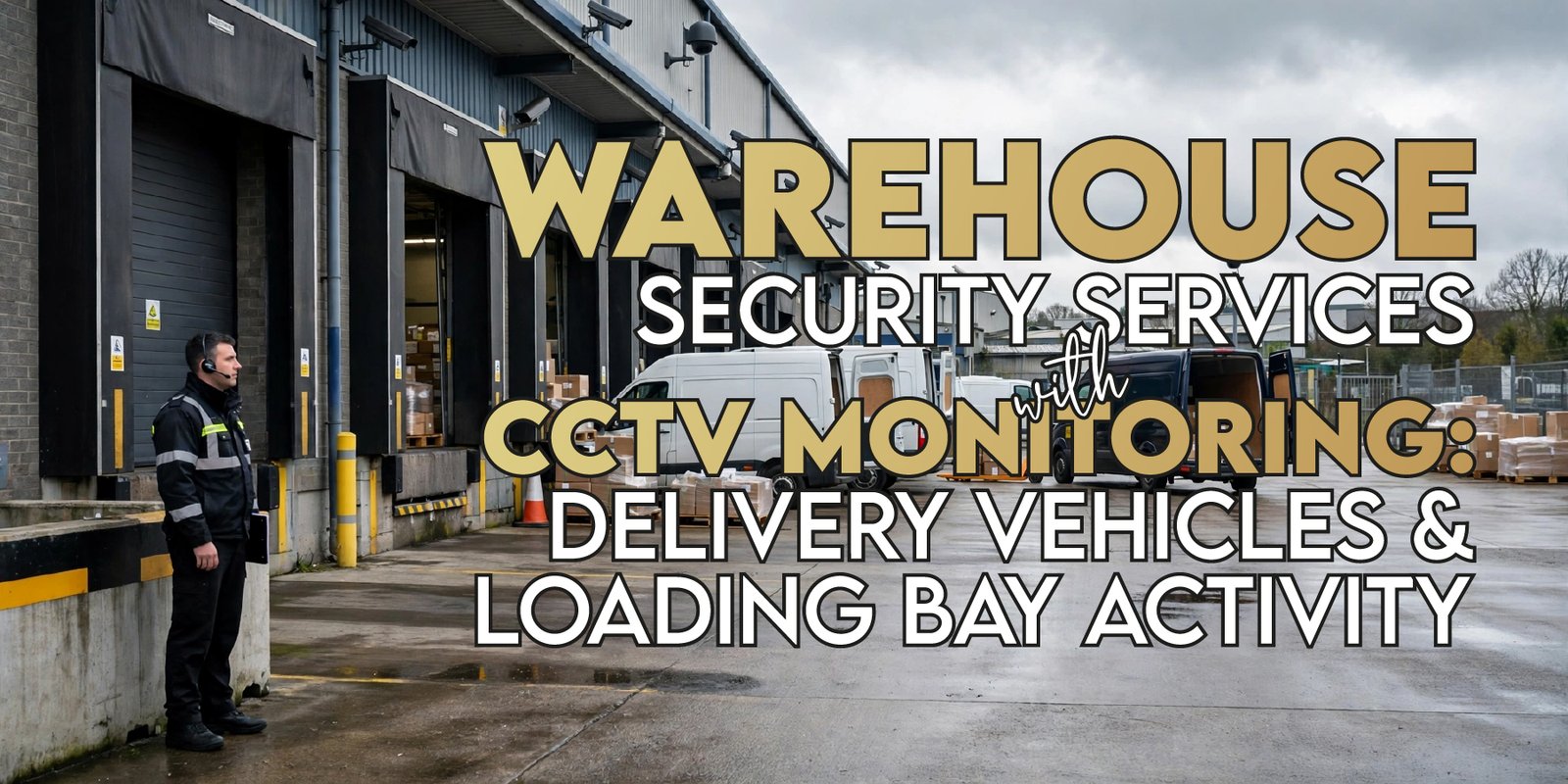
Warehouse security services and CCTV can support a clearer picture of delivery activity when the gatehouse, warehouse team and monitoring operator work to the same instructions. At a busy London depot, the priority is to connect an authorised vehicle arrival with the correct bay and an accountable handover.
Map the delivery journey
Document the route from arrival to departure. Include the waiting area, gate checks, allocated bay and exit process. Delivery vehicle monitoring is more useful when the operator knows which activity is expected at each stage. Agree how late arrivals, substitutions and unlisted collections are referred to the transport manager.
Do not treat a familiar vehicle or uniform as proof of authorisation. Use the booking and verification process established by the site, with an identified contact for exceptions.
Check camera views against operational needs
Warehouse CCTV monitoring should reflect the actual loading layout. Review whether parked trailers, raised doors or seasonal stock obscure important views. Lighting conditions can change between a daytime test and an early morning delivery. Record gaps for the system specialist to assess.
Loading bay surveillance supports observation; it does not replace trained vehicle marshalling or the warehouse traffic plan. Security personnel should not direct reversing vehicles unless that duty is expressly assigned and they are competent to perform it.
Connect observations to a response
A monitoring instruction should explain who receives an alert and what information they need. Give operators consistent bay names, a contact list and an escalation route if the first contact cannot respond. Guards need to know whether to observe, verify an access request or report an incident while maintaining a safe position.
- Record vehicle arrival and departure according to the site procedure.
- Refer booking discrepancies to the authorised manager.
- Report obstructed camera views and equipment faults.
- Hand over incomplete collections and unresolved incidents.
Define commercial CCTV services separately
Installation, maintenance, live monitoring and incident review are different activities. Confirm which are included, who can access footage and how a fault is reported. The SIA guidance on CCTV licensing explains why the required licence depends on the monitoring task.
For a broader site brief, see security guard services for warehouses. Agree a proportionate recording and retention policy with the organisation responsible for the camera system.
Translate the transport plan into monitoring instructions
The transport manager's plan should explain the activity that security staff are expected to recognise. Describe normal arrival windows, the process for allocating a bay and the contact who approves a change. A monitoring operator can then distinguish an expected vehicle waiting in the designated area from a vehicle appearing at a closed entrance. The difference should come from the operational brief, not from assumptions about the driver's appearance or the vehicle's branding.
Build instructions around exceptions that the site actually encounters. A trailer may arrive early, a booking reference may change, or a collection may be delayed after loading. Explain who resolves each situation and what the gate team should do while waiting for a decision. Keep authorised waiting arrangements clear so that an access query does not push vehicles into unsuitable areas. If the depot changes its allocation system, update the security instructions at the same time rather than leaving guards to interpret an outdated process.
Distinguish observation from vehicle movement control
Security personnel may record arrivals and report activity around a loading bay without controlling the movement of vehicles. Vehicle marshalling, loading operations and equipment use involve different responsibilities. Make those boundaries explicit during the site induction. A driver asking an officer where to reverse should not create an informal duty that the officer has neither been assigned nor trained to perform.
Identify the warehouse or transport contact who can provide the correct assistance. Give guards a safe place from which to carry out their own work, with a communication method that does not require them to enter a vehicle manoeuvring area. Cameras can assist observation, but a feed should not be treated as a substitute for the site's arrangements for safe vehicle movements. Where the guarding scope includes a specialist task, confirm competence, equipment and supervision separately instead of relying on the general description “loading bay security.”
Assess camera coverage with real operating conditions
A camera view that looks clear in an empty yard may be obstructed once several trailers are parked. Review coverage during representative operations, with the system specialist and site manager involved. Consider the doors, gates and routes that the operator needs to observe, rather than counting cameras as if quantity alone demonstrated adequate coverage. Record practical limitations and decide how they affect the monitoring brief.
Lighting should be assessed at the times the site uses the area. Headlights, reflective surfaces, weather and changes between indoor and outdoor light can affect useful detail. These are matters for a competent system review, not reasons for guards to adjust technical settings themselves. Ask the responsible specialist to explain what the system can reasonably support, including any limits on identifying details. Keep the resulting assessment available to the people planning the service so that the quotation does not promise visibility that the installed equipment cannot provide.
Coordinate the gatehouse and goods-in desk
The gatehouse and goods-in team often hold different parts of the same delivery information. One may know the vehicle's arrival time, while the other knows whether the load is expected and which bay is available. Agree how those facts are shared and who has authority to admit the vehicle. A security officer should not have to make a commercial receiving decision simply because the goods-in contact is busy.
Use a defined fallback contact for delays and booking discrepancies. Explain what information the officer can give the driver while a query is being resolved, and avoid promising a loading time that the warehouse has not confirmed. Where several businesses share an estate entrance, distinguish estate access from permission to enter an individual depot. A record of entry through a common gate does not establish that the receiving warehouse has authorised the visit. Keep these layers clear in both the briefing and any incident report.
Give CCTV alerts a practical escalation route
An alert is useful only when someone can act on it. Specify the receiving contact, the information required and the next step if that contact is unavailable. For a loading bay concern, an operator might need to report the location, time, observed activity and whether anyone appears to need immediate assistance. The response should follow the site's instructions and the nature of the situation.
Avoid instructions that require an operator to decide more than the available view supports. A camera may show a person near a vehicle without showing why they are there. The first report can describe that observation and request verification. On-site staff may then provide the context that resolves the concern. Keep the distinction between observation and conclusion in the written record. This improves the quality of follow-up and reduces confusion when several teams review the same event later, particularly where the incident crosses a shift change.
Establish a reliable shift handover
At a busy depot, the next security shift may inherit vehicles still waiting, outstanding access queries and a loading bay temporarily unavailable. A handover should identify those items rather than simply state that the yard is operational. Record the manager handling each unresolved issue and any instruction already given. Include faults that affect observation or communication, with the repair or escalation reference where available.
The incoming team should confirm it understands the current position. If a trailer has remained longer than expected, the relevant fact is the unresolved booking or collection status, not an unsupported suggestion that the vehicle is suspicious. Use the site's records to establish what is known. A handover also needs to identify temporary changes to routes, bay names or access doors so that an officer does not apply yesterday's instructions to today's layout. Keep the record concise enough to use while retaining the information needed for continuity.
Plan for a monitoring or communications interruption
Agree the response to a lost feed, a failed radio or an unavailable receiving contact before it occurs. The temporary arrangement should identify the affected duty, who approves the change and how long it will remain under review. A guard may be able to provide some direct observation, but this should not be described as equivalent to continuous coverage of every camera view.
The site manager should assess which operations and locations need attention during the interruption. If additional personnel are proposed, confirm availability and the specific posts they would cover. Do not quietly add duties to a single officer whose original assignment still requires attendance elsewhere. Record when the fault began, whom it was reported to and the instructions issued. When normal service returns, obtain confirmation from the responsible person and communicate the end of temporary measures to both the gatehouse and the warehouse team.
Keep access and footage records proportionate
Delivery logs and camera recordings can contain personal information. Decide what the organisation needs for its operational purpose, who is authorised to view it and how requests are handled. The guarding team should use the approved system rather than create a separate personal notebook or messaging archive that nobody manages. Information requested from drivers should be limited to the established access process.
If an incident requires footage review, provide the relevant time, location and reference to the authorised person. Avoid unnecessary distribution of clips or screenshots across operational teams. A warehouse manager may need to know that an incident is being investigated without needing a copy of identifiable footage. Clarify the difference between routine delivery records and material preserved for a specific incident. The organisation responsible for the system should make and document retention and disclosure decisions, with appropriate advice when the circumstances require it.
Evaluate the arrangement after the first working period
A practical review should ask whether the planned process matches actual operations. Check whether drivers receive consistent instructions, access queries reach the right person and CCTV alerts include enough detail to be useful. Look at repeated waiting-area problems or handover gaps and identify their cause. A security issue may originate in an unclear booking process or a changed loading layout rather than in the number of officers supplied.
Agree specific improvements with the relevant owner. The transport team may need to update contact details, the facilities team may need to repair lighting, and the guarding provider may need to revise a briefing. Set a review point to confirm that the changes are working. When requesting warehouse security services in London, include these expectations in the brief so that reporting and service reviews form part of the discussion rather than appearing as an extra requirement after mobilisation.
## A practical loading-bay briefing example
Imagine an illustrative delivery arriving at the wrong bay while the expected receiving contact is unavailable. The gate record confirms the vehicle's arrival, but that does not settle where unloading should take place. The officer should use the agreed escalation contact and keep the driver informed of the authorised waiting arrangement. The monitoring operator can report relevant activity without making a receiving decision on behalf of the warehouse.
Use this example to test whether the written instructions provide enough information. Identify who can allocate the bay, how the gatehouse receives the decision and how the change is recorded. Check that the temporary waiting position does not conflict with the site traffic plan. This exercise is not a real incident report or a claim about H&D's past results. It is a way to expose a missing contact or unclear responsibility before a similar query interrupts a working shift and several teams begin giving the driver different instructions.
Frequently asked questions
Can cameras replace a gatehouse officer?
That depends on the duties and site assessment. Cameras can show activity, but an agreed person or system still needs to verify access and respond to exceptions.
What should be checked before the first shift?
Confirm camera coverage, communication equipment, bay names, booking contacts and fault escalation. Walk the site with the warehouse manager to resolve unclear instructions.
Discuss your London security requirements
When choosing a security company in London, provide the site address, operating hours, required duties and the person responsible for decisions. H&D Security can discuss a suitable scope and personnel availability. Request a security quotation with your dates, site layout and reporting requirements so that the proposed cover reflects the work involved.