
Retail Security Guards for Returns Desks: Supporting Staff During Post-Christmas Refund Rushes
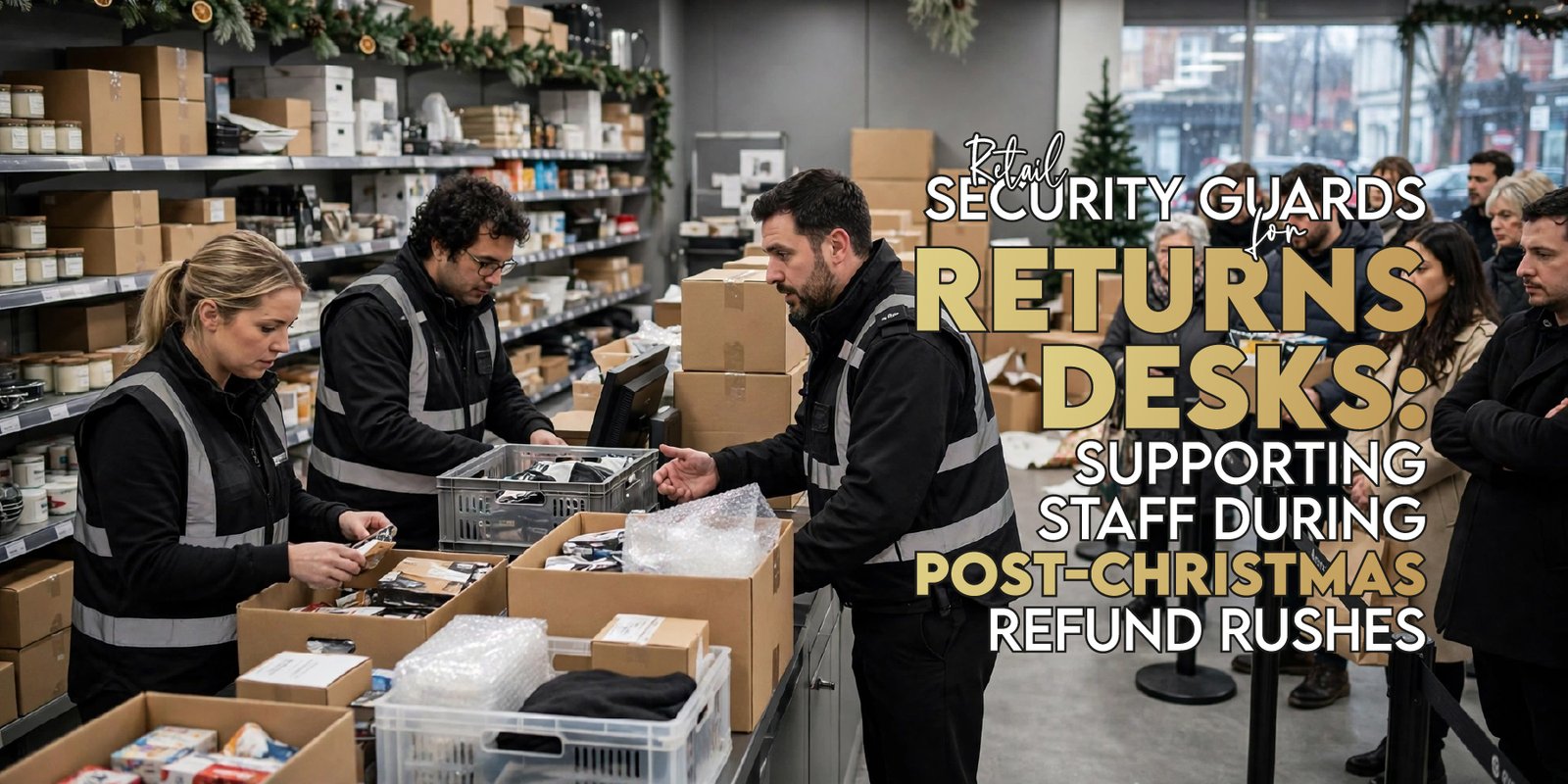
Planning post-Christmas retail security in November gives store managers time to review the returns desk before the busiest refund periods. Retail security guards can support staff with visible presence, observation and agreed escalation. Their role should complement customer service, while refund decisions remain with authorised retail staff.
Review the customer service area layout
Assess where a queue can form without blocking tills, entrances or routes through the shop. Consider customers carrying bulky purchases and people who need an accessible route. Refund queue management works best when clear signs and staff guidance explain where to wait and what information is needed.
Position the assigned officer where they can observe the relevant area without making ordinary customers feel that every return is treated as suspicious. The site assessment and expected duties should determine positioning.
Separate refund decisions from security support
Customer service staff should explain the store’s policy and refer exceptions to their manager. Retail security guards should not independently approve or reject a refund. Their instructions should address behaviour, safety concerns and requests for assistance.
Agree a discreet method for staff to request support. A calm approach, sufficient personal space and clear communication can help prevent a difficult conversation from becoming more confrontational. Escalation should follow the site’s procedures and the seriousness of the situation.
Prepare for incidents without disrupting every customer
Returns desk incidents can affect nearby staff and the queue. Identify who calls the duty manager, who continues customer service and where assistance is available. Staff should not have to leave an unresolved safety concern to find a contact number.
- Confirm the support signal and response contact.
- Keep accessible routes and exits clear.
- Explain when the manager takes over a discussion.
- Record observable facts and actions accurately.
- Provide a handover for repeat or unresolved concerns.
Connect guarding with the wider retail plan
Customer service area guarding may need to operate alongside entrance cover, patrols and closing duties. Confirm which positions need continuous attendance and how breaks are covered. One officer cannot be present at several separate locations at the same time.
If an incident needs CCTV review, use the authorised footage-request process and include the relevant time and location. For wider responsibilities, read about security guards for retail premises. Check appropriate staff licensing through the SIA licence register before assigning licensable duties.
Prepare the returns operation before customers arrive
Start with the store's expected returns process rather than the security roster. Identify where customers will be directed, which staff handle routine refunds and who decides exceptions. Review whether the normal customer service desk has enough space for the anticipated activity and whether temporary signs are needed. A guard can support the operation more effectively when the underlying process is clear to both employees and customers.
Share the final arrangement with the security provider before the peak period. Explain any differences from ordinary trading, including extended hours, a relocated desk or changes to the entrance route. Avoid introducing a new process at the start of a shift without updating the briefing. The objective is to reduce uncertainty at the point where a customer asks for help. If staff give conflicting directions or cannot identify the decision-maker, the resulting frustration can create additional demands that a visible security presence alone will not resolve.
Keep queue information clear and consistent
Customers should be able to tell where to join the queue and what service is available at the desk. If separate queues exist for collections, exchanges and refunds, make the distinction easy to understand. Officers can assist with directions within their brief, but should not be expected to explain detailed refund policy unless that information has been provided and the role agreed.
Review the queue while the store is operating. A layout that looks adequate before opening may become difficult when customers arrive with large packages or shopping trolleys. Report where the queue crosses a walkway, blocks a display or makes access difficult. Store management can then decide on a coordinated change, with staff explaining it to those waiting. Moving the queue without communication can cause people to lose their place or believe others are being allowed ahead of them. A practical plan therefore addresses information and fairness as well as the physical route.
Establish a discreet staff-assistance process
Customer service staff need a straightforward way to request support without escalating an ordinary disagreement unnecessarily. Agree the contact method and what information should be passed. A short message identifying the desk, the concern and the assistance needed is more useful than an unexplained request for security. Confirm who responds if the assigned officer is already dealing with another matter.
The response should fit the situation. A manager may be the right person for a policy dispute, while security may be needed to address a safety concern within the agreed procedure. Staff should understand this distinction so that guards are not used as a substitute for a refund decision-maker. Test the process during a briefing and check that all shifts use it consistently. Temporary colleagues should receive the same information as permanent staff, including the route for reporting a concern that does not require an immediate response but still needs management attention.
Use calm communication without promising an outcome
An officer supporting a difficult interaction should listen, use clear language and avoid making promises about the refund. The customer may want a quick answer, but a guard should not offer a commercial resolution they cannot authorise. Where appropriate, explain that the relevant manager has been contacted and identify the next step in the store's process. Maintain suitable personal space and follow the site's training and instructions.
Avoid treating every raised voice as the same type of incident. Describe the behaviour observed and assess the response through the agreed procedure, rather than making assumptions about the person. If the situation presents an immediate threat or emergency, follow the applicable emergency instructions and involve the appropriate services. The guarding brief should define escalation clearly while recognising the limits of the officer's role. Store managers remain responsible for ensuring that policy explanations and customer service decisions are communicated by the people authorised to make them.
Account for accessibility and different customer needs
Some customers may need a different way to access the returns service or understand the information provided. A long standing queue, a narrow route or an unclear announcement can create difficulties that are not obvious from the desk. Brief staff on the store's assistance arrangements and the contact who can authorise an alternative. Officers should ask what help is useful rather than assume what a person can or cannot do.
Keep accessible routes free of temporary barriers and unattended packages. If the returns desk is moved, review whether the new location remains practical for customers using mobility aids or accompanying children. Provide consistent directions from the entrance so that people do not repeatedly join the wrong queue. Where a customer needs more time to communicate, a calm explanation and an appropriate staff contact can be more useful than pressure to move quickly. Security support should fit the store's approach to respectful service and avoid turning an access need into a confrontation.
Separate observations from conclusions about refund activity
A customer making several returns or presenting incomplete paperwork may require a retail policy decision, but those facts alone do not establish wrongdoing. Security staff should follow the store's agreed procedures and avoid labelling a person on the basis of an assumption. If an officer observes behaviour that needs reporting, the record should describe what happened, where and when, with any relevant context.
The manager can decide how the store's process applies and whether further review is needed. Guards should not conduct informal investigations outside their assignment or share suspicions widely among staff. Where CCTV or transaction information is relevant, use the authorised review process and limit access appropriately. Clear role boundaries help staff respond consistently and protect the quality of any later incident review. They also prevent a routine disagreement about a receipt or return condition from being unnecessarily reframed as a security allegation.
Maintain cover elsewhere in the store
A returns-desk assignment may coincide with normal entrance duties, floor patrols and closing checks. Map those responsibilities against the actual staffing available. If an officer remains at customer service for an extended period, identify who covers any position that cannot be left unattended. Do not assume that a single guard can provide continuous presence at several distant locations simply because all of them fall within the same store.
Agree break cover and escalation to the supervisor before the shift begins. If additional support is needed, use the provider's agreed request process and confirm availability. The store should also review whether a change in desk location affects the officer's visibility or communication. A deployment that worked during ordinary trading may need adjustment when queues and promotional displays alter the space. These decisions should be made by the responsible managers, with the updated brief communicated to the officer rather than added informally through several different staff requests.
Record incidents in a way the next shift can use
A useful report identifies the time, location, observed behaviour, assistance requested and action taken. Distinguish a customer service complaint from a security incident and avoid including unnecessary personal details. If the manager is still handling a matter at handover, record the contact and the next step rather than expecting the incoming officer to reconstruct the situation from informal conversations.
Where footage may be relevant, provide the incident reference and approximate time to the authorised person. Do not assume that a radio request means the recording has been preserved. Follow the established process for confirmation and escalation. Staff should also know how to report concerns about their own wellbeing after a difficult interaction. That support sits within the employer's arrangements and should not depend on whether a formal security incident was recorded. Consistent reporting helps the store identify recurring operational issues without turning every difficult return into an exaggerated account.
Review the first busy days and adjust the plan
The first post-Christmas trading days can show whether the expected queue pattern matches reality. Review where delays occur, what questions customers repeatedly ask and whether staff can reach the decision-maker quickly. A change to signage or manager availability may resolve a problem more effectively than moving the guard. Use the evidence from the operation rather than assuming that every delay is caused by insufficient security.
Agree improvements with the relevant owner and brief all affected shifts. If opening hours change or the returns desk moves again, update the written assignment. Keep a short record of what changed and why, so that the next seasonal plan benefits from the experience. When discussing retail security guards with H&D Security, explain the returns process, expected working period and support duties you want covered. This allows the enquiry to focus on a practical service requirement rather than a general request for an extra person near customer service.
## Give store managers a focused daily review
At the end of a busy returns period, review the issues that affected customer movement and staff support. Ask whether the queue remained within the planned area, whether assistance requests reached the right person and whether managers were available to make refund decisions. Distinguish an operational delay from a security concern so that the proposed improvement addresses the actual problem.
Keep the discussion factual and avoid circulating unnecessary customer information. An anonymised description of a recurring queue problem may be enough to support a layout change. Assign each action to a responsible person and brief the next shift on any revised arrangement. If the store asks the guarding provider for a change in duties, explain what has changed and confirm the revised scope. This gives retail security guards a stable basis for their work while allowing the operation to improve as the pattern of post-Christmas returns becomes clearer across successive trading days.
Frequently asked questions
Should a guard challenge every customer with a return?
No. The guarding brief should be proportionate and based on observed behaviour and agreed procedures. Ordinary refund enquiries belong with customer service staff.
When should a retailer arrange the cover?
Review the expected returns period, opening hours and staffing needs early enough to agree the scope and induction. Confirm availability with the provider rather than assuming extra officers can be supplied at short notice.
Discuss your London security requirements
When choosing a security company in London, provide the site address, operating hours, required duties and the person responsible for decisions. H&D Security can discuss a suitable scope and personnel availability. Request a security quotation with your dates, site layout and reporting requirements so that the proposed cover reflects the work involved.