
Retail Security Guards and CCTV Footage: Managing Evidence During Christmas Trading
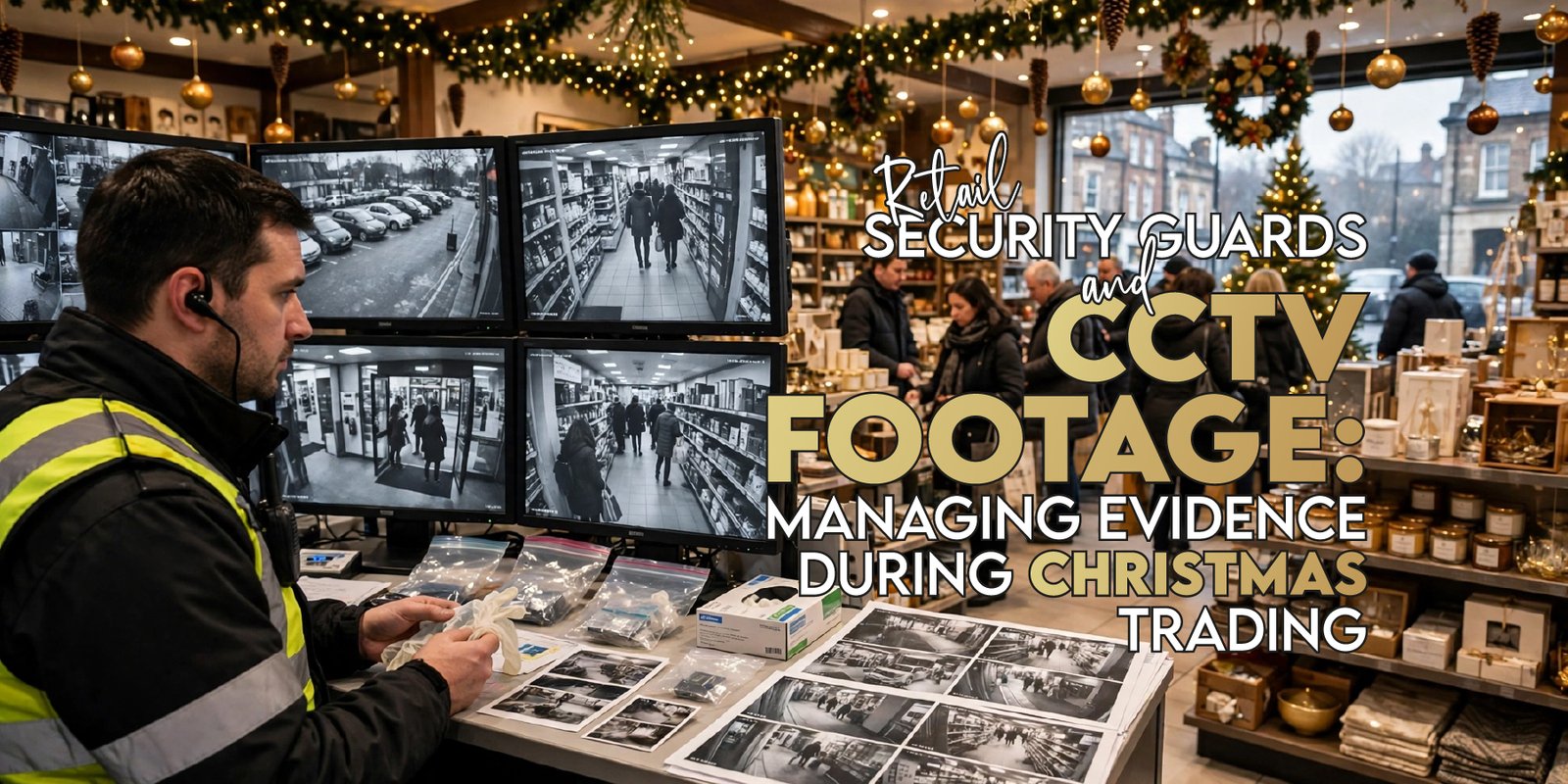
Retail security guards may be the first people to record the details of an incident during Christmas trading. Their notes can help an authorised CCTV operator locate the relevant sequence. A practical process links the incident report with the footage while keeping access controlled and the original information intact.
Record facts that help locate the footage
Use an incident reference, the time, the location and a concise description of what was observed. If the time is approximate, say so. Identify the relevant entrance, aisle or till using the store’s agreed names. Avoid presenting an assumption about intent as an established fact.
Retail CCTV footage may show a different angle or a longer sequence than an officer saw in person. Keep the initial account distinct from later observations so that the record remains understandable.
Request preservation through authorised staff
Christmas retail security teams should know whom to contact when footage may be needed. An authorised person should assess the request and preserve relevant material before routine deletion where appropriate. Do not ask staff to record a monitor on a personal phone or send clips through an informal group chat.
Keep a record of the incident reference, the period requested, the person handling the request and any subsequent transfer. Store the material in the approved system with access limited to those who need it.
Set a justified retention process
The ICO’s surveillance guidance explains that there is no universal statutory minimum or maximum retention period for CCTV. The organisation should justify retention by purpose rather than simply filling the available storage.
A specific incident may require a different retention decision from routine shop security recordings. The responsible organisation should document that decision, restrict access and review whether continued storage is necessary.
Prepare staff before the trading peak
CCTV evidence management should not begin with a hurried search for passwords during an incident. Confirm the authorised contacts, request procedure and secure transfer process in advance. Check that staff know how to escalate police enquiries, customer access requests and requests from another retailer.
- Use one incident reference across notes and footage requests.
- Check whether camera and incident-log times align.
- Preserve original material through the approved process.
- Document authorised copies or disclosures.
- Keep daily operational reports free of unnecessary personal details.
Related reading on retail guarding responsibilities can help define the officer’s role.
Define the incident information the store needs
An incident process works better when the store decides in advance what information staff should record. The purpose is to create a useful account, not to collect every possible detail about everyone nearby. Identify the time, location, observed behaviour, people notified and action taken. Where a person provides an account, distinguish their statement from the officer's own observations. If something is uncertain, record that uncertainty rather than filling a gap with an assumption.
For example, an officer may see an argument near a returns desk without hearing how it began. The report can describe the exchange they witnessed and the assistance requested, while noting that the earlier conversation was not observed. An authorised footage review may add context later. Keeping those stages separate helps the manager understand which information was available at the time of the response. It also avoids a report becoming more definite than the available evidence supports after several people have discussed the incident.
Agree who can request, review and export recordings
Requesting footage, viewing it and creating a copy are separate actions. A guard may need to request that a sequence be preserved without having permission to browse the recording system. A store manager may authorise a review, while a designated operator performs the export. Set out those responsibilities clearly and identify the organisation responsible for decisions about the recorded information.
The procedure should cover absences as well as normal staffing. If the usual authorised manager is unavailable during a late shift, staff need an approved alternative contact. They should not share a colleague's credentials or improvise an export process simply because an incident feels urgent. Keep access credentials within the organisation's established controls. Where several stores use a central monitoring service, explain how a local incident reference reaches the central team and how the store receives confirmation that the request has been logged. A clear chain of responsibility reduces both delay and unnecessary access.
Check time references before searching for an incident
A report may use the till time, a staff member's watch or the CCTV system's displayed time. If those references differ, the operator can search the wrong sequence even when the report is otherwise accurate. Agree which time reference the incident log uses and how staff should flag an approximate time. The responsible system contact should investigate any known discrepancy rather than leaving each operator to apply an undocumented adjustment.
When a relevant sequence is located, record enough context to explain the search. Include the incident reference and the period reviewed through the approved process. Do not alter an original recording to make its displayed time appear to match a separate account. Any technical issue should be documented and handled by the authorised person. The aim is to preserve a clear relationship between the original material and the incident report, so that a later reviewer can understand how the sequence was identified and what limitations were known.
Preserve useful context around the event
A very short clip can omit what happened immediately before or after the moment that attracted attention. An authorised reviewer should consider the relevant sequence in context, according to the purpose of the request. That does not mean copying a whole day's activity by default. The scope should be appropriate to the incident and avoid including unrelated material unnecessarily.
Security staff can help by describing the route or areas involved. A concern beginning near a checkout may continue towards an entrance, with different cameras covering each part. The report should identify those locations without pretending that every stage was observed. If there are gaps in coverage, record them. A camera's failure to show an action does not automatically prove that the action did not occur. Equally, an unclear image should not be described as a positive identification. Accurate limitations are part of a useful evidence record, not a weakness to be hidden.
Keep the original and any working copies accountable
Where an authorised export is needed, follow the system's approved process and preserve the original information as required. Record who created the copy, when it was created, the incident reference and where it was stored. If a copy is provided to an authorised recipient, document that transfer through the organisation's procedure. Avoid informal copies that cannot be traced back to a particular request or decision.
Staff should not edit, crop or annotate footage casually in an attempt to make it easier to share. Any necessary processing should be handled by the authorised person, with the purpose and method documented. The original material and any later working version should not become confused. A store may also need specialist assistance to ensure a recipient can view an exported file correctly. That is a technical handling issue to resolve through approved channels, rather than a reason to record the screen using a personal device.
Prepare for requests from police and other recipients
An enquiry about an incident should reach the person authorised to decide what can be disclosed. The guard receiving it can record the request and contact the appropriate manager, without making an independent promise to supply footage. The organisation should verify the request and use its established process for any authorised disclosure. Record the relevant reference and the action taken so that another shift does not unknowingly handle the same request differently.
The same discipline applies when another retailer, a landlord or a member of the public asks for recordings. Their interest in the incident does not automatically entitle them to a copy. Avoid discussing identifiable people or showing footage casually to colleagues who are not involved. Where the request raises a legal or data-protection question, the responsible organisation should obtain appropriate advice. A practical procedure tells frontline staff where to refer the request, allowing them to remain helpful without making decisions outside their authority.
Handle customer access requests through the right process
A customer may ask whether they were recorded or request access to footage containing their image. Staff should recognise that this is different from an ordinary complaint about service. Provide the organisation's established contact or process, record the request as instructed and refer it promptly. A guard should not refuse the request simply because the footage also includes other people, nor promise immediate unrestricted access to the system.
The responsible team will need to assess the request and any applicable requirements. Frontline staff can assist by passing on the approximate time, location and contact information through the approved channel. Do not collect additional personal documents unless the organisation's authorised process calls for them. Keep any identifying information secure and avoid entering it in a public-facing incident book. Clear referral instructions are especially useful during Christmas trading, when temporary staff may not be familiar with the organisation's normal information-handling arrangements.
Brief seasonal staff on confidentiality and escalation
Temporary retail workers may see an incident, hear a radio report or be asked to help identify a location on a recording. Their induction should explain the limits of that involvement. Store incidents should not become material for personal social-media posts or informal messaging groups. Give staff a simple route for reporting relevant information to the manager or security supervisor without distributing it more widely.
Use a short scenario to check understanding. In a fictional example, an employee receives a request from a friend to send a clip of an argument at the till. The correct operational step is to refer the request through the authorised process, not to decide whether the friend seems trustworthy. Discuss the same boundary with supervisors, who may otherwise make an informal exception during a busy shift. Consistent handling across permanent and seasonal teams helps protect the integrity of the record and keeps disclosure decisions with the people responsible for them.
Review unresolved incidents at each handover
The handover should identify footage requests that still need action, including who is handling them and whether preservation has been confirmed. Do not assume that mentioning an incident on the radio means the relevant recording has been secured. A specific incident reference and named contact make it easier for the incoming manager to follow up without repeating the entire investigation.
Review the process after the trading peak. Look for avoidable delays, unclear time references, missing camera location names or requests sent to the wrong contact. Separate system faults from training issues and assign improvements to the appropriate owner. The measure of good CCTV evidence management is not the number of clips exported. It is whether relevant information can be handled accurately, securely and proportionately for a defined purpose. When discussing retail security guards with a provider, include these reporting and referral expectations in the assignment rather than assuming they are understood.
## A short evidence-handling exercise for supervisors
Use a fictional incident to test the procedure without accessing real customer footage. Ask a supervisor to identify the incident reference, the authorised footage contact and the information needed to locate the relevant sequence. Then ask what happens if the usual contact is absent. The exercise should reveal whether staff know the process rather than test their ability to remember technical settings.
Add a request from an unauthorised colleague who wants a copy of the clip. Confirm that the supervisor can explain the referral route without sharing material or promising a disclosure. Record any uncertainty and update the briefing. This small exercise can uncover gaps in shift coverage, time references or request handling before Christmas trading adds pressure. It should use invented details and remain separate from a real investigation. The resulting action list belongs with the manager responsible for the process, who can confirm that changes have been made and communicated to all relevant shifts.
Frequently asked questions
Should every guard have CCTV export access?
No. Access should follow the defined role and authorisation process. An officer can provide incident details without having unrestricted access to recordings.
Can a shop share footage publicly to identify someone?
Do not treat public sharing as the default response. Refer disclosure decisions to the organisation responsible for the footage and its approved procedures, taking appropriate advice where needed.
Discuss your London security requirements
When choosing a security company in London, provide the site address, operating hours, required duties and the person responsible for decisions. H&D Security can discuss a suitable scope and personnel availability. Request a security quotation with your dates, site layout and reporting requirements so that the proposed cover reflects the work involved.