
Event Security Services for Indoor Exhibitions: Controlling Access to Restricted Areas and Equipment
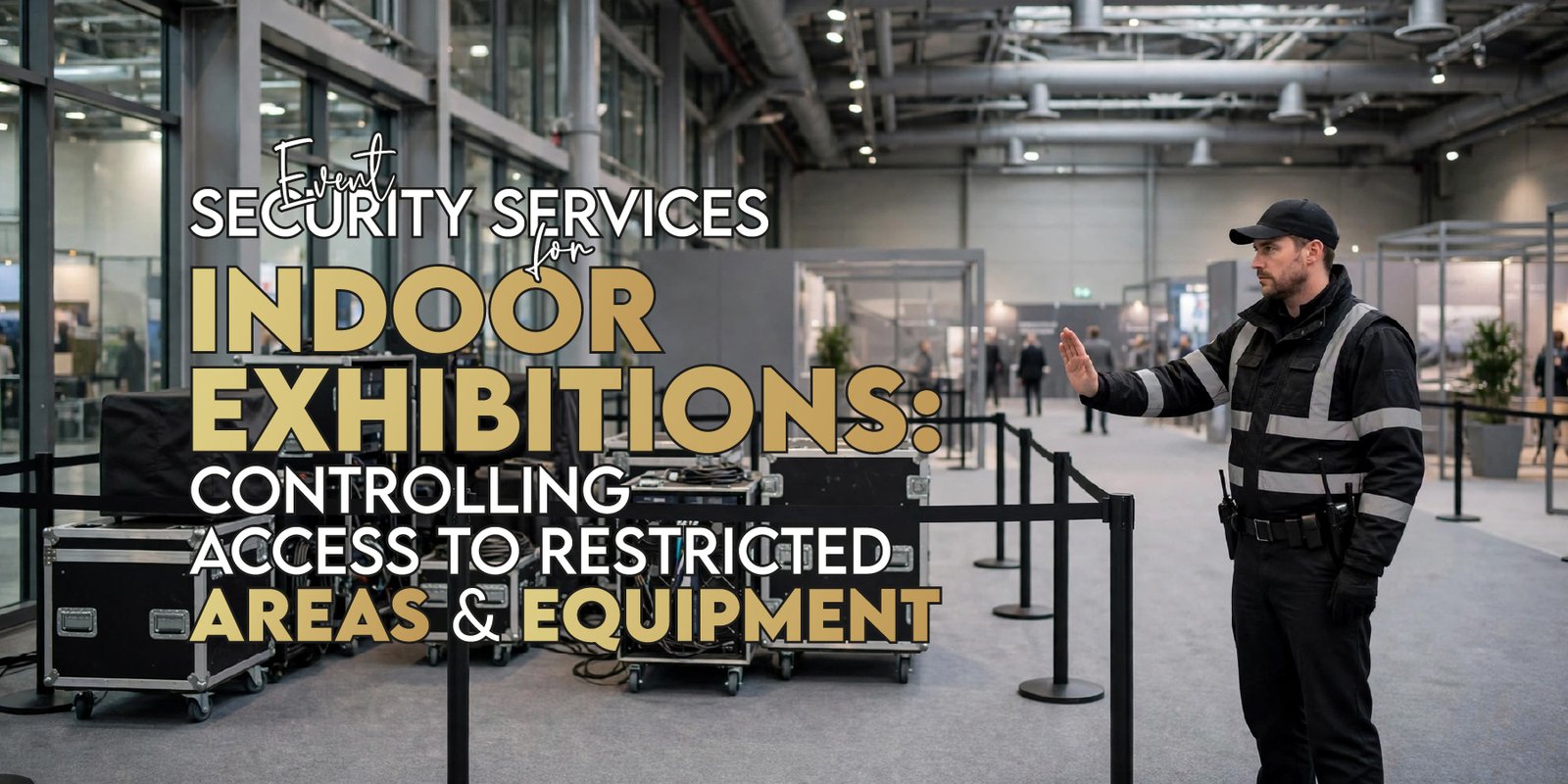
Event security services for indoor exhibitions must accommodate several groups using the same venue for different reasons. Visitors need straightforward entry, while exhibitors, technicians and contractors need controlled access to working areas. Clear permissions help the security team support the exhibition without disrupting legitimate activity.
Divide the venue into workable access zones
Mark public halls, staff facilities, storage areas, control rooms and contractor routes on the venue plan. State which credential permits access to each zone and who can authorise an exception. Restricted area monitoring becomes inconsistent when a badge means different things to different teams.
Arrange a clear process for lost passes and replacements. Exhibition security guards should refer uncertain requests to the designated organiser rather than accepting an informal assurance from an unknown visitor.
Plan for build-up and breakdown
Trade exhibition security often has different priorities before and after public opening. During build-up, contractors and equipment arrive through service entrances. During breakdown, several exhibitors may remove valuable items at once. Agree the checks and records required by the organiser for these periods.
Define when public access ends and when dismantling may begin. A guard’s assignment should not include lifting, electrical work or directing vehicle movements unless those responsibilities are separately agreed and supported by appropriate competence.
Give equipment movements an accountable process
Exhibition venue access instructions should identify the contact responsible for approving a collection or equipment removal. Where the organiser uses release documents, brief officers on what to check and whom to contact about a discrepancy. Avoid creating ad hoc paperwork at the exit.
- List the approved service entrances and their operating hours.
- Explain exhibitor and contractor credentials.
- Identify the manager who resolves access disputes.
- Confirm incident reporting and lost-property procedures.
- Provide handovers for unresolved equipment queries.
Keep circulation and emergency routes usable
Queues, empty packaging and temporary display structures can affect movement through an indoor venue. Report changes that obstruct the agreed circulation plan. The organiser and venue should coordinate corrective action before the obstruction becomes part of normal operations.
The HSE guidance on event emergencies supports planning for incidents before opening. Include the venue’s emergency instructions in the briefing and consult H&D’s related guide to event security and visitor movement when preparing the service scope.
Plan security across the exhibition lifecycle
An exhibition changes character several times before the last contractor leaves. During installation, the hall is a workplace with equipment movements and restricted activities. During public opening, visitor entry and circulation become more prominent. At breakdown, exhibitors and contractors may be removing items simultaneously. Describe these phases separately so that the security deployment reflects the work taking place rather than applying one set of instructions throughout.
Set clear transition points between phases. Identify who authorises public opening, when exhibitor-only access begins and how staff are told that dismantling can proceed. A change in the published timetable should be communicated to the security supervisor as well as the exhibitors. If an exhibition runs late, the original contractor access plan may no longer fit. Agree who can make the revised decision and how it reaches the service entrances, public doors and internal posts without conflicting messages.
Build an access matrix people can use at the door
An access matrix should connect each type of credential with the areas and times it permits. Exhibitors, visitors, venue staff and contractors may need different permissions. Keep the system simple enough for staff to apply consistently, with a designated contact for exceptions. A colourful badge is not useful if the team has not been told what it authorises or how to identify an invalid credential.
Include replacement and withdrawal procedures. An exhibitor who loses a pass needs an approved route to obtain another, while a cancelled contractor booking should no longer appear as an expected arrival. Explain who updates the list and how entrance staff receive the current version. Do not rely on a printed list from the morning if changes continue throughout the day. The objective is a controlled process that supports legitimate access, not a complicated checking routine that creates confusion for both visitors and officers.
Define restricted areas by function
Restricted areas can include storage rooms, technical spaces, control points and exhibitor back-of-house areas. Explain why access is restricted and who can authorise entry, without distributing sensitive operational details unnecessarily. A guard assigned to a public hall needs enough information to recognise the boundary and refer a request, but may not need access to every technical area themselves.
Temporary partitions and doors can change the apparent boundary during an exhibition. Check that signs, credentials and staff instructions remain consistent after the layout is adjusted. If an area becomes unavailable, tell the team where authorised people should go instead. Avoid leaving a guard to resolve competing instructions from an exhibitor and a venue contractor. The organiser should identify which authority takes precedence for the particular space and provide a clear escalation contact for disagreements that cannot be settled at the entrance.
Coordinate service entrances with the loading schedule
Service access often operates to a different timetable from visitor entry. Confirm delivery slots, contractor arrival periods and the location where drivers should report. Security officers need to know who verifies the booking and who decides whether a vehicle can proceed. Where a delivery arrives without the expected information, use the agreed referral process rather than treating a familiar supplier name as sufficient authorisation.
The venue's traffic and loading arrangements should remain under the responsible operational team. Guards can carry out assigned access checks without becoming vehicle marshals or loading supervisors by default. If a specialist duty is included, confirm the required competence and working arrangements separately. Give staff a safe means of contacting the relevant manager when a driver needs help. Review the service entrance plan during breakdown, when a high number of collections may occur close together and the information needed to verify each movement can differ from the arrival process.
Give equipment release checks a defined purpose
Where an organiser uses an equipment release process, explain what the check establishes and what it does not. An officer may verify that the required authorisation is present, while ownership and commercial disputes remain matters for the appropriate manager. The procedure should identify which items or movements are covered and how exceptions are handled. Avoid a vague instruction to stop anything that looks valuable.
Provide staff with the approved form or verification method before the collection period. If an exhibitor arrives with different paperwork, the officer should know whom to contact and where the collection can wait without obstructing others. Keep records proportionate to the agreed purpose and avoid creating unnecessary copies of personal documents. A consistent process protects legitimate exhibitors from arbitrary decisions while making it easier to identify an unresolved query that needs management attention. It also provides a clearer account of what was checked if a later question arises.
Preserve a straightforward visitor experience
Public entry should be easy to understand. Give visitors clear information about tickets, opening times, re-entry and any entry conditions before they reach the checking point. Provide a way to resolve ticket or registration problems without blocking the main flow. Security staff should know the location of assistance desks, accessible routes and other visitor facilities so that a request for directions does not become an avoidable delay.
Review how queues interact with nearby stands, stairs and doors. A popular registration desk or demonstration can draw people into an area that was clear during the initial inspection. Officers can report the developing issue and support an agreed change, while the organiser coordinates with exhibitors and venue staff. Keep emergency routes available and avoid moving a queue to a location simply because it is out of sight of the entrance. A useful circulation plan considers the whole visitor journey through the hall rather than one doorway in isolation.
Connect security reporting with venue management
The venue, organiser and security provider may each have their own reporting system. Agree how an incident is referenced across them and which person coordinates follow-up. The frontline report should describe the time, location, observations and action taken. It should distinguish an officer's direct account from information provided by an exhibitor or visitor. This makes it easier for the manager to assess what is known and what still needs checking.
Identify which matters require immediate contact and which belong in the routine shift report. A broken access door or blocked route may need action before the next scheduled review. The security supervisor should know how to reach the responsible venue contact and what to do if that person is unavailable. Avoid sending the same concern to several people without assigning ownership. A clear response route is more useful than a long distribution list that leaves everyone assuming another recipient will deal with the issue.
Brief replacement staff and late arrivals properly
Exhibitions can involve short assignments and changing teams. A replacement officer needs the current access matrix, site plan and escalation contacts, even if they have worked at the venue before. Familiarity with the building does not establish familiarity with the current exhibitor permissions or equipment-release process. Allow time for the briefing before the officer takes over a post that requires continuous attendance.
Keep the handover focused on changes and unresolved matters. These might include a credential query, a restricted area temporarily relocated or an exhibitor waiting for a collection decision. Record who is dealing with each issue and what has already been communicated. The incoming team should not repeat checks unnecessarily or contradict an authorised instruction because it was passed only verbally to the outgoing officer. Supervisors should also confirm that radios and other assigned equipment are working and that the officer knows how to request assistance from their actual location.
Assess the service after each exhibition day
A multi-day exhibition provides an opportunity to improve the arrangement before the next opening. Review access delays, unclear badge permissions, incidents near popular stands and any difficulties during deliveries. Ask whether the problem arose from staffing, information, layout or a technical fault. The appropriate response may be an updated exhibitor instruction rather than a change to the number of guards.
Assign actions before the next shift and confirm that the revised information reaches all affected teams. Keep a record of the changes so that the final review can distinguish planned improvements from informal workarounds. When requesting trade exhibition security from a London provider, explain whether daily reviews and supervisor liaison are part of the expected service. A clear brief helps the provider discuss suitable support for the whole exhibition period, including the less visible but important work before public opening and after the halls close.
## Resolve access questions before exhibitors arrive
Ask the organiser to confirm how a late exhibitor, replacement contractor or lost-pass holder will be handled. These routine exceptions can create delays if the normal registration contact is not available at a service entrance. The security team needs a named decision-maker and an approved waiting arrangement, not a general instruction to use discretion with anyone who appears connected to the exhibition.
Review the same questions for the final collection period. An exhibitor may send a different driver to collect equipment, so the process should explain who can approve the change and what record is needed. Keep security checks distinct from ownership decisions and commercial disputes. A brief rehearsal of these scenarios can reveal conflicting instructions between the venue and organiser while there is still time to resolve them. Document the agreed answer and include it in the supervisor's briefing so that each entrance applies the same process throughout the exhibition, including when staff are replaced or duties change.
Frequently asked questions
Should guards decide who owns an item?
Guards should follow the agreed verification and escalation process. An ownership dispute needs referral to the authorised organiser or appropriate authority, rather than an unsupported decision at the door.
Can one team cover visitors and service access?
Possibly, but the proposal must account for simultaneous duties, distances and breaks. Check that a service entrance is not left unattended when the team responds in the public hall.
Discuss your London security requirements
When choosing a security company in London, provide the site address, operating hours, required duties and the person responsible for decisions. H&D Security can discuss a suitable scope and personnel availability. Request a security quotation with your dates, site layout and reporting requirements so that the proposed cover reflects the work involved.